Bedtime Routine Chart for Kids: An Evening That Ends at Lights Out
Bedtime routine chart for kids: choose a few calm steps, put them in your family's order, and help your child see what comes before lights out.
By Kids Daily Responsibilities Chart by Cosmo Suite · Editorial policy
Published · 6 min read
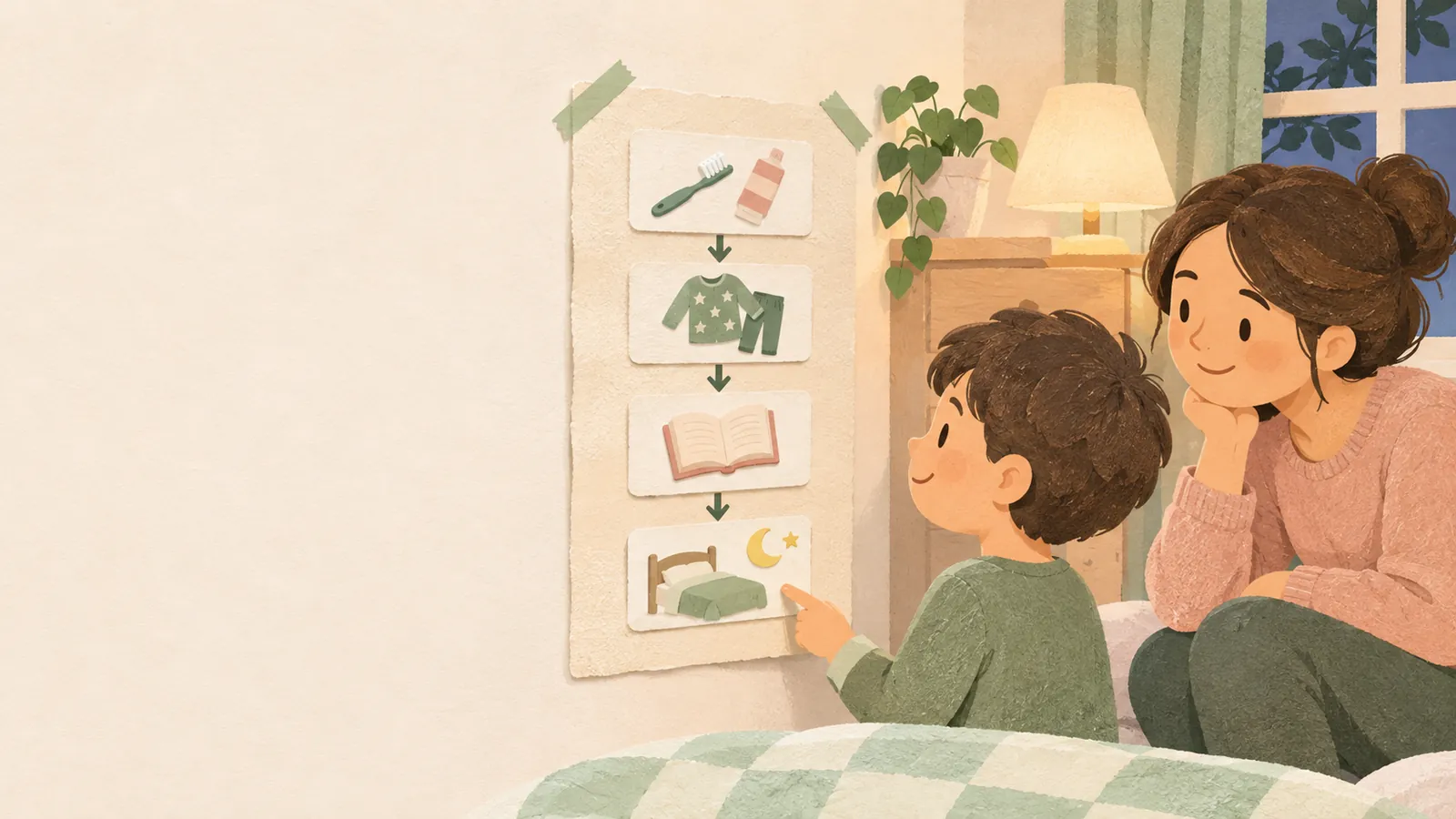
A bedtime routine chart for kids is a visual reminder of the steps your family follows before bed. It works best when it matches your real evening and ends at the point you choose, such as getting into bed or lights out. Start with a few familiar actions. The unused spaces can stay empty.
The chart is a cue, not a sleep plan. The American Academy of Pediatrics describes a predictable routine such as brushing teeth, reading, and bed. Your family can choose a different order or fewer steps. You still decide the bedtime, help with care, and respond when something changes.
Key takeaways:
- Use the steps your household already follows, in that order.
- Keep the sequence short enough to scan at the end of the day.
- Teach each picture and keep adult care and safety decisions with you.
- Make the final step visible, then set the board up again for next time.
What makes a bedtime routine chart useful?
A bedtime chart helps a child see what comes next without asking you to repeat the whole routine each time. It cannot make a child sleepy or guarantee a smoother bedtime. Its job is narrower: show familiar steps in a steady order and make the finish clear.
The CDC's routine examples include evening activities such as dinner, bath time, calm play or story time, then a bedtime routine. The order depends on the household. For a chart, choose only the part your child needs help remembering, rather than copying a full schedule.
| Evening moment | Possible visual cue | Adult still decides |
|---|---|---|
| Put a few things away | Toys going to their usual place | Which items are safe to handle and what must be picked up by an adult |
| Get ready for bed | Pajamas or a bathroom cue | Help with changing, washing, and any care your child needs |
| Brush teeth | Toothbrush and sink | Toothpaste, brushing support, and the final check |
| Quiet time | A book beside a bed | Whether reading fits tonight and when it ends |
| Finish | Child in bed or lights dimmed | The bedtime and lights-out decision |
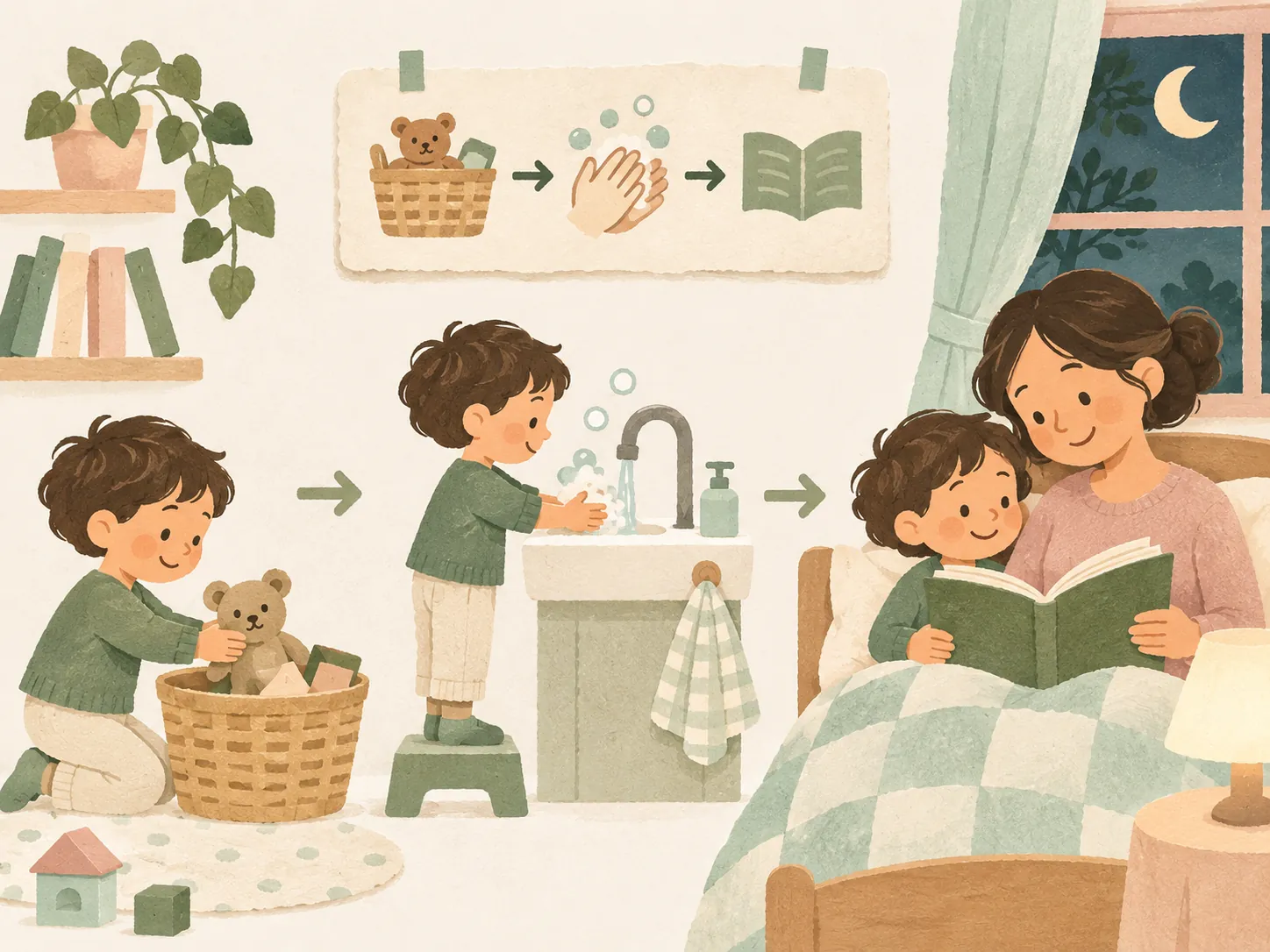
These are examples to adapt, not required jobs or a promise that every step is included in a printable. Some families bathe earlier; others read after brushing. A child may need an adult beside them for each step. The picture shows what comes next, while you stay responsible for care.
If your family wants a paper board with Morning, Evening, and Done columns, the Kids Daily Responsibilities Chart printable has six Evening spaces. You can use only a few and leave the rest blank.
How do you choose the order?
Put the steps in the order they happen in your home, then end with the point where you want the routine to stop. A chart is easier to follow when the pictures match the actual path through the evening, not an ideal schedule copied from somewhere else.
For example, one family might finish dinner, put toys away, use the bathroom, brush teeth, read together, then go to bed. Another family may bathe before dinner or read after pajamas. Both can make sense. The CDC notes that families can decide which routines work best for them.
Try this small example and adjust it to your household:
| Order | Child-facing prompt | Adult's part |
|---|---|---|
| 1 | Put away the toys you chose | Pick up anything unsafe or too difficult |
| 2 | Use the bathroom | Help as needed and handle hygiene |
| 3 | Brush teeth | Stay involved in dental care |
| 4 | Choose or hear a book | Keep the reading time that works for your family |
| 5 | Get into bed | Decide when the routine is finished |
This is an example sequence, not a five-step requirement. Move, remove, or combine steps to fit your child's age and your evening. If your child already knows what to do after brushing, that step may not need a picture. If one cue leads to several questions, make it more specific or teach it again.
For a related daytime example, see the morning routine chart guide. It uses the same principle of putting picture cues in the order a child moves through the routine.
What should the chart show at the end?
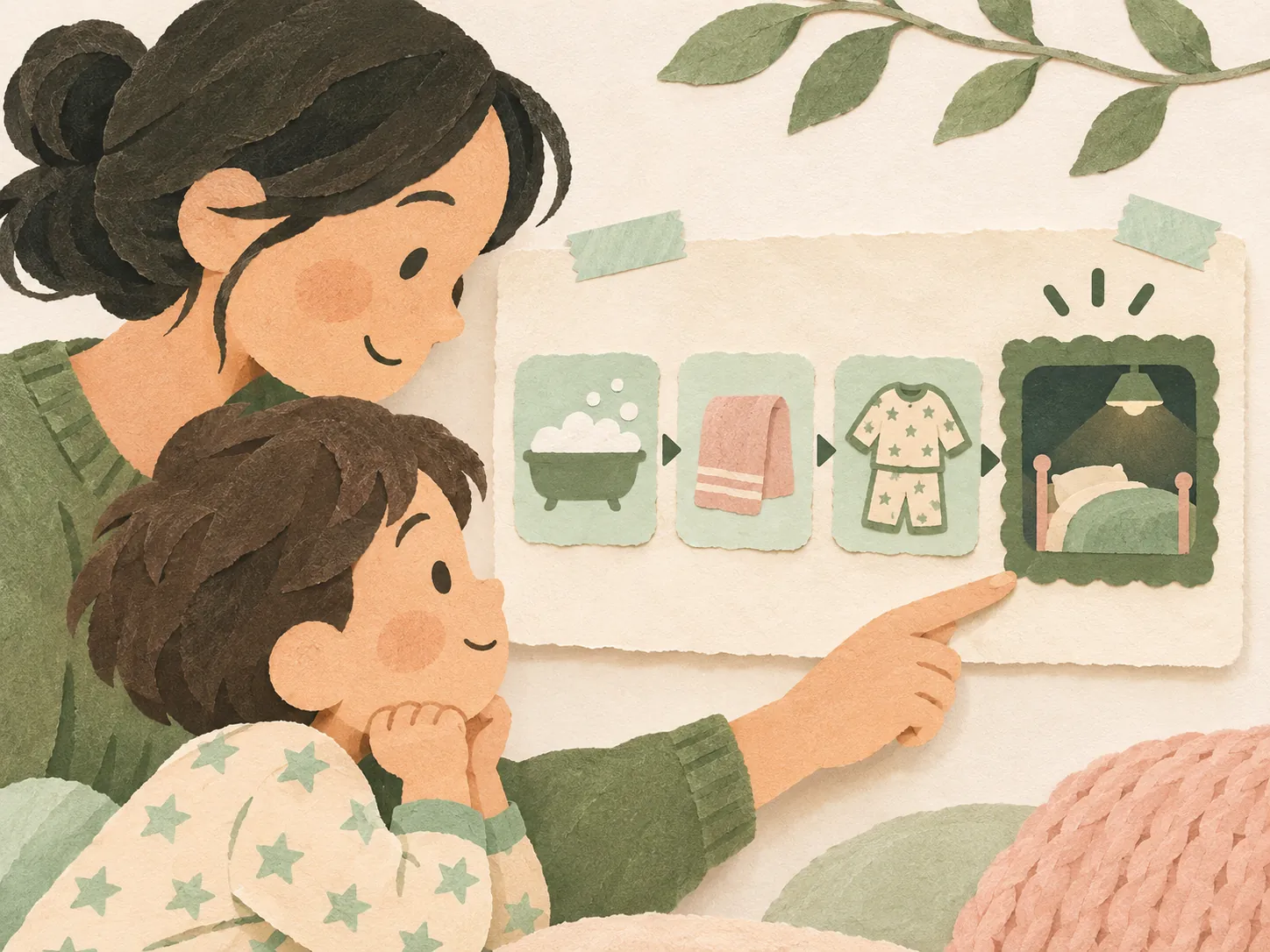
Choose one visible finish, such as “in bed” or “lights out,” and make clear which one you mean. “Bedtime” can mean different things to different people: some families use it for the start of getting ready, while others mean the moment the child is in bed.
That distinction can prevent the chart from becoming a negotiation over what counts as done. If the last picture is getting into bed, a story can come before it. If it is lights out, decide where the story belongs. Be specific about “done”: bedtime can mean the whole routine, getting into bed, or lights out. The AAP's family routine guidance notes that lights-out times may differ among children in a family, so a shared board can show common steps while an adult handles each child's bedtime.
The AAP's “Brush, Book, Bed” example gives parents a simple nighttime sequence. You can use those three ideas as inspiration without treating them as a rule. The CDC's guide to routines and rules also describes bedtime as one example of a predictable family routine.
How can a child who cannot read follow it?
Teach the picture as one action before expecting it to work as a reminder. Point to the image, say what it means in a few words, and do the step together. A picture that looks obvious to an adult may not tell a young child exactly what to do.
For example, a toothbrush picture can mean “brush teeth.” Show the child where the toothbrush is and stay with them for the care they need. If the image could mean “get ready” or “go to the bathroom,” choose a clearer cue or explain it in the moment.
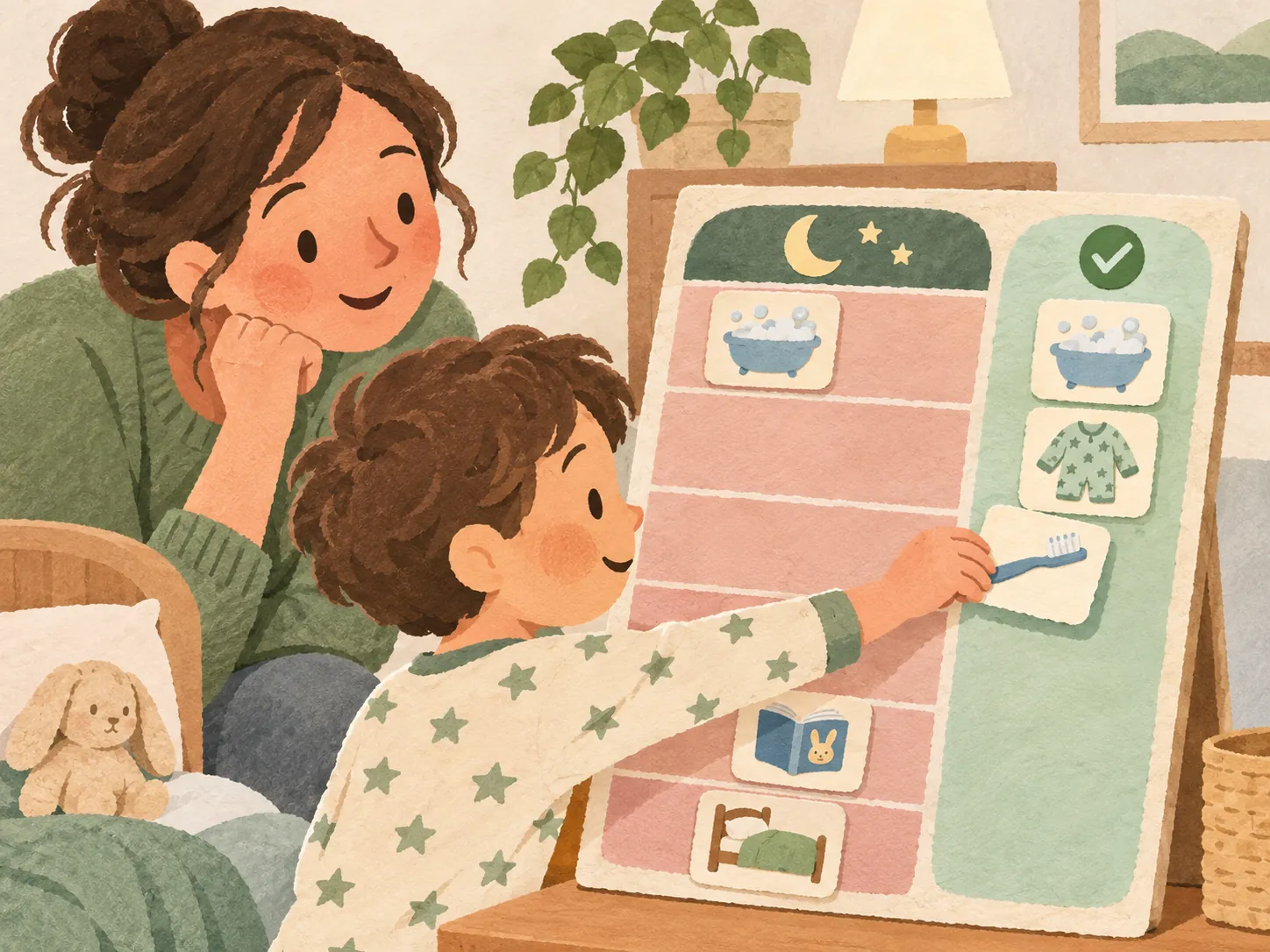
The picture chore chart guide explains the teach-one-picture approach for children who cannot read yet. If your child is learning to use a card, show the move to Done together after the action. Keep giving reminders when needed; the chart supports your routine but does not replace your help.
How do you keep it from becoming another task for you?
Keep the same few steps for a while and put the board where the routine begins. A chart becomes harder to maintain when the order changes every night, the cards are difficult to reach, or you have to rewrite the list. Reusable picture cards avoid rewriting the same sequence, though an adult still needs to put the cards back for the next routine.
The Kids Daily Responsibilities Chart is one printable US Letter PDF, not an editable file. Print it on cardstock, cut out the cards, and set up the Evening row. Lamination and Velcro are optional. It includes 35 picture cards across different jobs, from toddler tasks such as potty and brushing teeth to older-child jobs such as laundry and pet care.
The printable chart with Evening and Done columns lets a child move a finished card to Done. It has no app, points, or money feature. One PDF gives you one board, so do not count on a separate board for each child. Start with only the steps you can use consistently.
If a card is ignored, first check whether the child understands the picture, can see it, and knows the action. Remove a step that does not fit your home. You may still need to prompt or help your child, especially while the routine is new.
Why trust this guide?
Kids Daily Responsibilities Chart publishes printable routine tools for families. The routine examples here are grounded in guidance from the American Academy of Pediatrics and the CDC, checked on November 14, 2026. Those sources describe general routines. They do not assess your child, choose your bedtime, or determine what is safe in your home. Visit the about page for publisher information, read the editorial policy to see how sources are checked, or contact the team with a correction.
For another age-based example, read the chore chart for a five-year-old. It shows how a family can choose separate morning and evening steps while keeping adult checks in the routine.
Frequently asked questions
What should go on a bedtime routine chart for kids?
Choose the familiar steps your child needs to see before bed, in the order they happen at home. Examples can include putting toys away, using the bathroom, brushing teeth with an adult nearby, changing into pajamas, and choosing a book. Keep care and safety decisions with the adult.
How many steps should a bedtime routine chart have?
There is no required number. Start with the few steps that are easiest to forget or cause repeated questions, and leave the other spaces empty. A chart with six Evening slots does not mean you need six tasks.
Should lights out be on the chart?
It can be the clear finish to the sequence, but the chart does not set a bedtime or decide how much sleep your child needs. You choose the household schedule and handle changes to it.
How do I make a bedtime chart for a child who cannot read yet?
Use one clear picture for one familiar action, then point to it and practice together. Keep the chart where your child can see it, and explain any picture that is not obvious to them.
What if my child keeps asking for one more thing after the chart is done?
Check whether the chart shows the steps your family actually follows and whether the last step is clear. Decide in advance how your family handles extra requests. The chart can show the sequence, but it cannot settle every bedtime question for you.
Can I use a bedtime chart and still read a story?
Yes. A story can be part of your routine if it works for your family. Put it in the sequence where it normally happens, and keep the chart as a visual reminder rather than a replacement for time together.
Can I use one chart for siblings?
A shared evening sequence may work when the steps apply to everyone, but children can need different tasks or help. The Kids Daily Responsibilities Chart PDF provides one board, so it is not a separate board for each child.