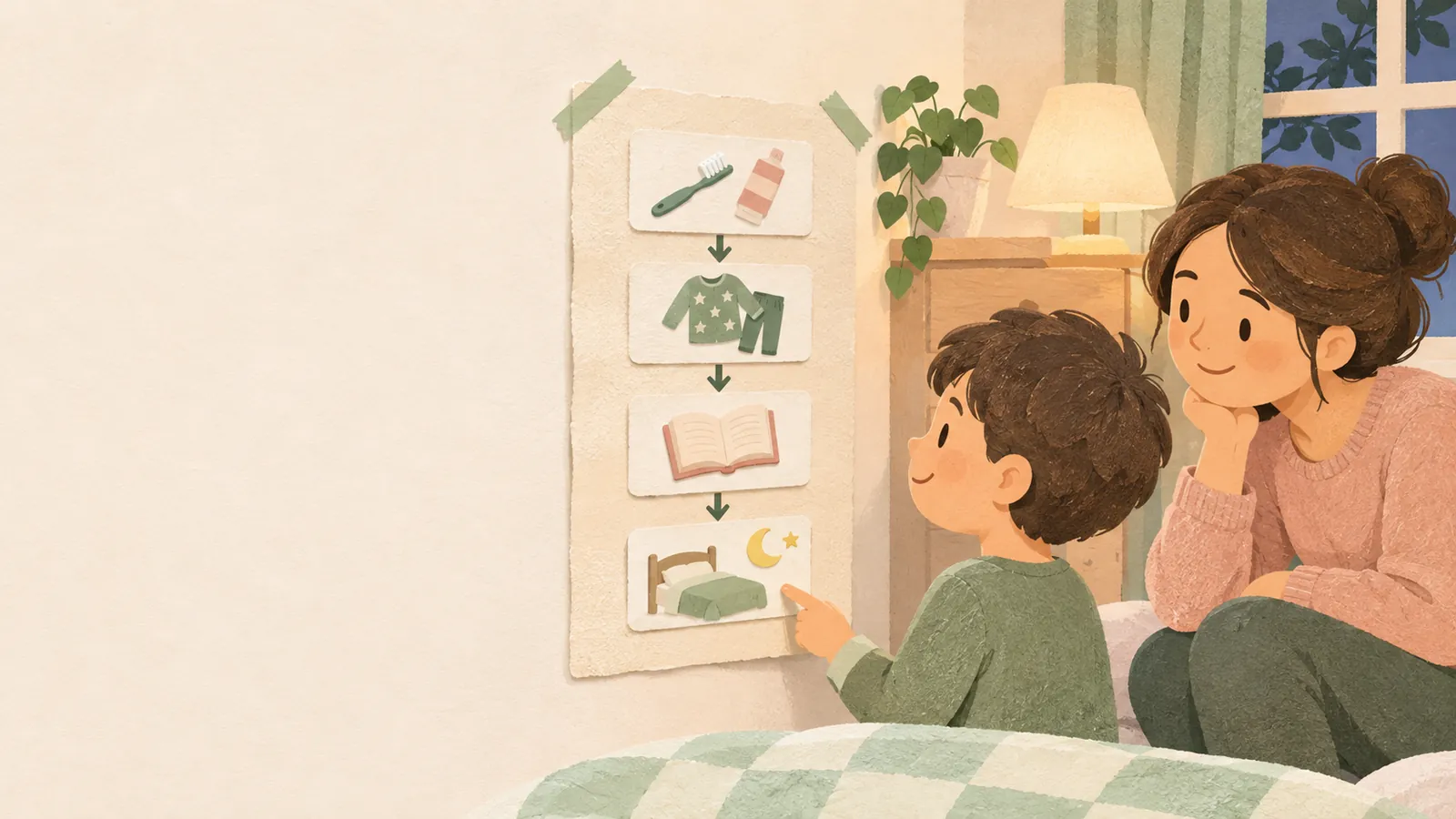
Morning Routine Chart for Kids: Six Steps Before School
Morning routine chart for kids: choose a few clear steps, put them in the order your family uses, and help your child follow each picture before school.
By Kids Daily Responsibilities Chart by Cosmo Suite · Editorial policy
Published · 7 min read

A morning routine chart is a visual sequence of familiar steps a child follows before leaving home. It works best when it follows the order your family already uses. Choose a few steps that need a reminder, show each one with a clear picture, and put the first step where the morning begins. You may still need to remind your child as they learn the routine.
For a child who cannot read yet, pictures make the sequence visible. Teach what each picture means, help with the task, and decide what is safe. Start with a small set, practice the same steps together, and leave unused spaces blank.
Key takeaways:
- Begin with the part of the morning that needs the most reminders.
- Put steps in the order your household actually follows.
- Teach each picture as one clear action.
- Keep supervision, safety, and time-sensitive decisions with the adult.
What belongs on a morning routine chart?
Put only the steps your child needs help remembering before the family leaves home. A morning routine chart is a visual sequence for familiar tasks, such as getting dressed, brushing teeth with an adult nearby, and putting pajamas in the hamper.
The American Academy of Pediatrics describes chores by age, with examples that vary by child. Parents should choose jobs that fit their family. The CDC's routine guidance also offers sample routines and encourages families to choose what works for them. Use these as general guidance, not a checklist every child must complete.
| Step to consider | Picture cue | Adult stays responsible for |
|---|---|---|
| Get dressed | Clothes laid out or a shirt | Choosing weather-appropriate clothes and helping as needed |
| Brush teeth | Toothbrush and sink | Dental care, toothpaste, and checking the task |
| Put pajamas away | Pajamas going into a hamper | Handling tangled, heavy, or unreachable laundry |
| Get shoes | Shoes by the door | Choosing safe footwear and checking the weather |
| Take a bag | Backpack near the exit | Packing and checking items needed for the day |
Choose only the steps that help in your home. If your child already dresses without a prompt, leave that card out. If “get ready” causes confusion, split it into one or two actions your child can understand. Keep hot appliances, sharp tools, cleaning products, and heavy items out of a young child's independent job list.
The picture chore chart guide for children who cannot read yet shows how to teach a picture as one familiar action. If you want Morning, Evening, and Done spaces together, the Kids Daily Responsibilities Chart printable gives you a paper layout to prepare at home.
How do you choose the order of the steps?
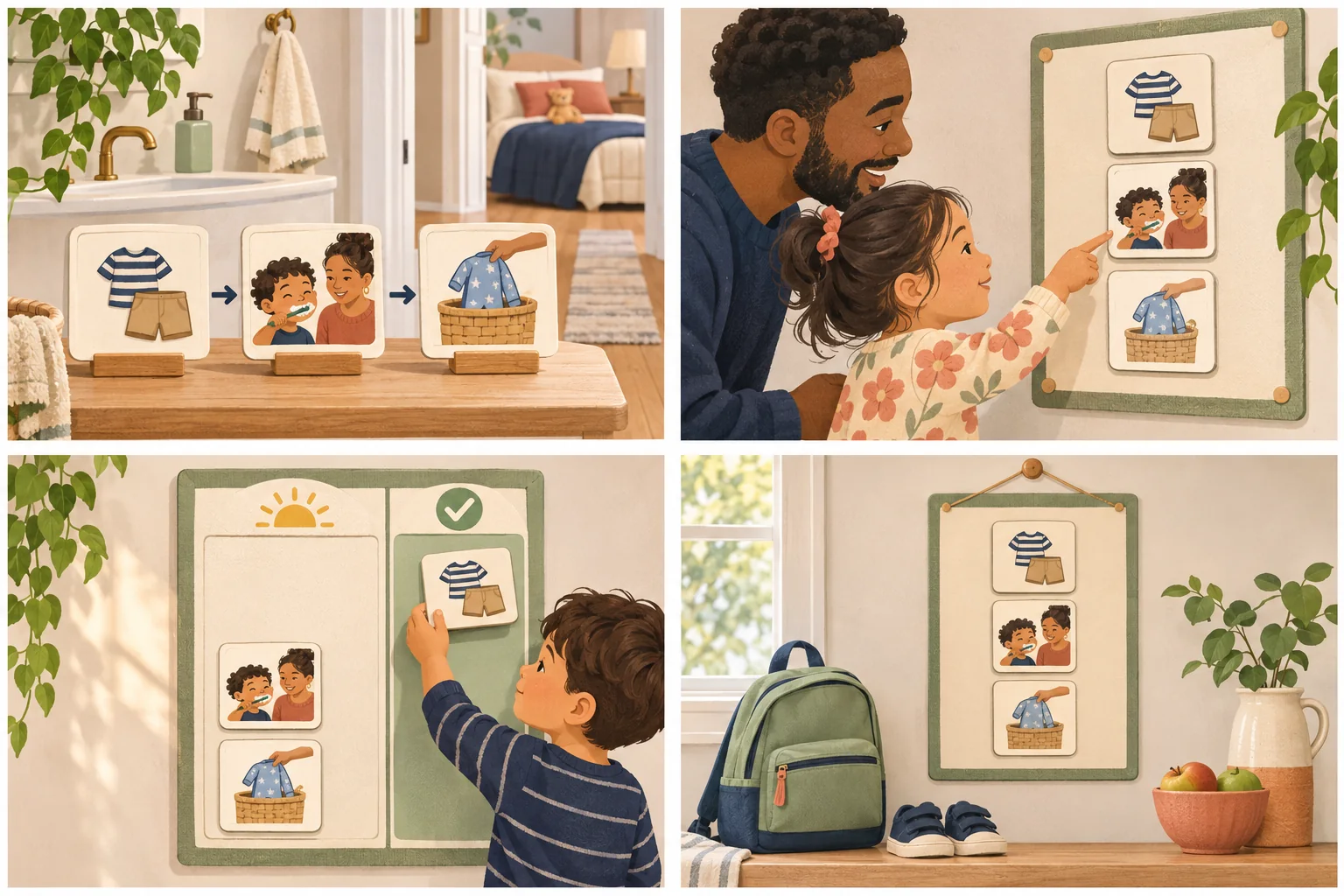
Arrange the chart in the order your child moves through the home, not by an ideal morning timetable. If your child gets dressed in the bedroom, brushes teeth in the bathroom, and puts on shoes by the door, put the pictures in that same sequence.
Here is a sample to adapt. It is an illustration, not a prescribed routine:
| Order | Picture | Where it happens | Adult check |
|---|---|---|---|
| 1 | Get dressed | Bedroom | Help with clothing choices if needed |
| 2 | Put pajamas in the hamper | Bedroom | Keep laundry light and reachable |
| 3 | Brush teeth | Bathroom | Stay involved in brushing |
| 4 | Eat breakfast, if used | Kitchen | Adult handles hot food and drinks |
| 5 | Put on shoes | By the exit | Check fit and weather |
| 6 | Take backpack | By the exit | Adult checks that needed items are packed |
You may use fewer steps. Perhaps breakfast happens before dressing, or an adult keeps the bag. Change the order to match the child and your home. If the chart has six spaces, leave some empty. The spaces give you room to choose what belongs in the routine.
Look for a point where the morning regularly stalls. If everyone gets stuck finding shoes, put that picture near the exit. If toothbrushing needs an adult beside the child, keep it on the chart as a shared step. The picture marks what happens; it does not decide who is responsible for doing it.
How can a child who cannot read use the chart?
Use one clear picture for one task, then show the child what it means. Point to the image, name the action in a few words, and practice it together before expecting the picture to serve as a reminder.
For example, a toothbrush picture can mean “brush teeth.” Keep it separate from the larger sequence of using the bathroom, washing, dressing, and packing a bag. If one picture seems to mean too many things, split the sequence or choose a more specific image.
The CDC's preschool parenting tips encourage parents to give children clear expectations and support. Keep directions short and show the action. A picture may help a child recall a routine they have practiced, but children differ in what they can do and how much help they need.
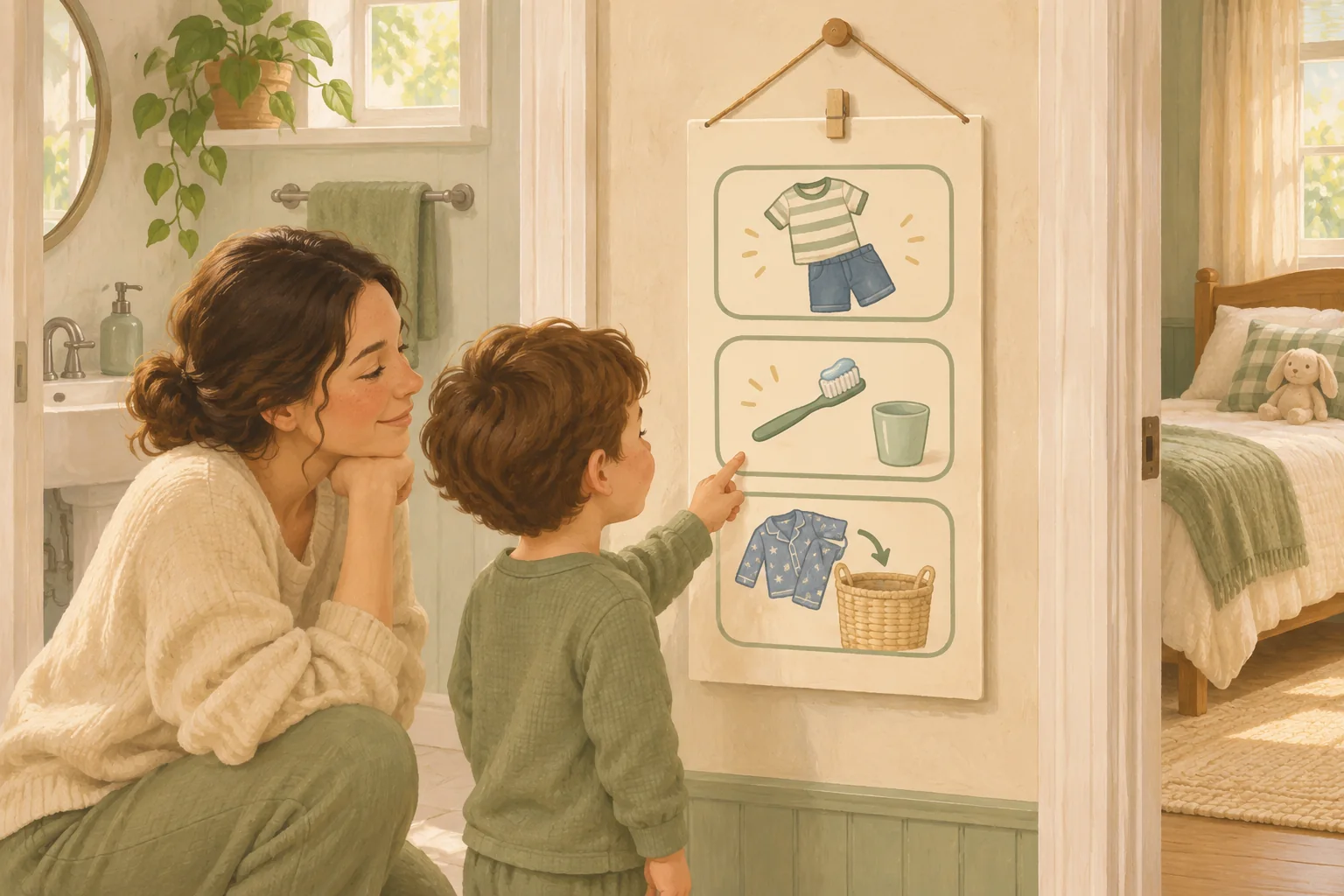
Make sure the chart is low enough for the child to see and reach. If cards are small or difficult to recognize, move the chart closer or simplify the images. For a younger child, practice the move to “Done” together as well. The Kids Daily Responsibilities Chart picture board has a Done area, but you still reset and teach the cards as part of the routine.
What should you leave off the chart?
Leave off any job that is unsafe, unclear, or too dependent on adult judgment for a child to manage. A chart should not turn a household responsibility into a child's job just because there is a picture for it.
Keep cooking, handling hot drinks, using sharp objects, working with cleaning products, and carrying heavy loads with an adult. A child might help with a small safe part, such as carrying an empty cup, if you decide it fits. The exact setup matters more than the name of the task.
Also leave off steps that do not happen every morning. A weekly chore can live in a separate list. Packing school items may be an adult check rather than a child task. If a step changes from day to day, explain the change instead of asking the child to guess from the picture.
The American Academy of Pediatrics gives examples of chores by age, but those examples are starting points. Your child's ability, the task, and your supervision decide what is appropriate. Keep the chart flexible and remove a step if it causes more confusion than it solves.
How do you keep the routine from becoming another parent task?
Choose a short sequence you can repeat without rewriting it every day. A morning chart can become one more job for you if every step changes, cards go missing, or the board is hard to reset.
Keep the board where the first step starts. Show your child how to move a finished picture to Done, then put cards back together before the next morning or at a time that already fits your day. A reusable paper chart avoids rewriting the same list, but it still needs occasional adult attention.
If your child ignores a card, check the setup before adding more instructions. Is the picture clear? Does the child know what action it means? Can they reach the board? Is the task too broad or not yet familiar? Remove, move, or teach the card again. Continue giving reminders while the routine is being learned.
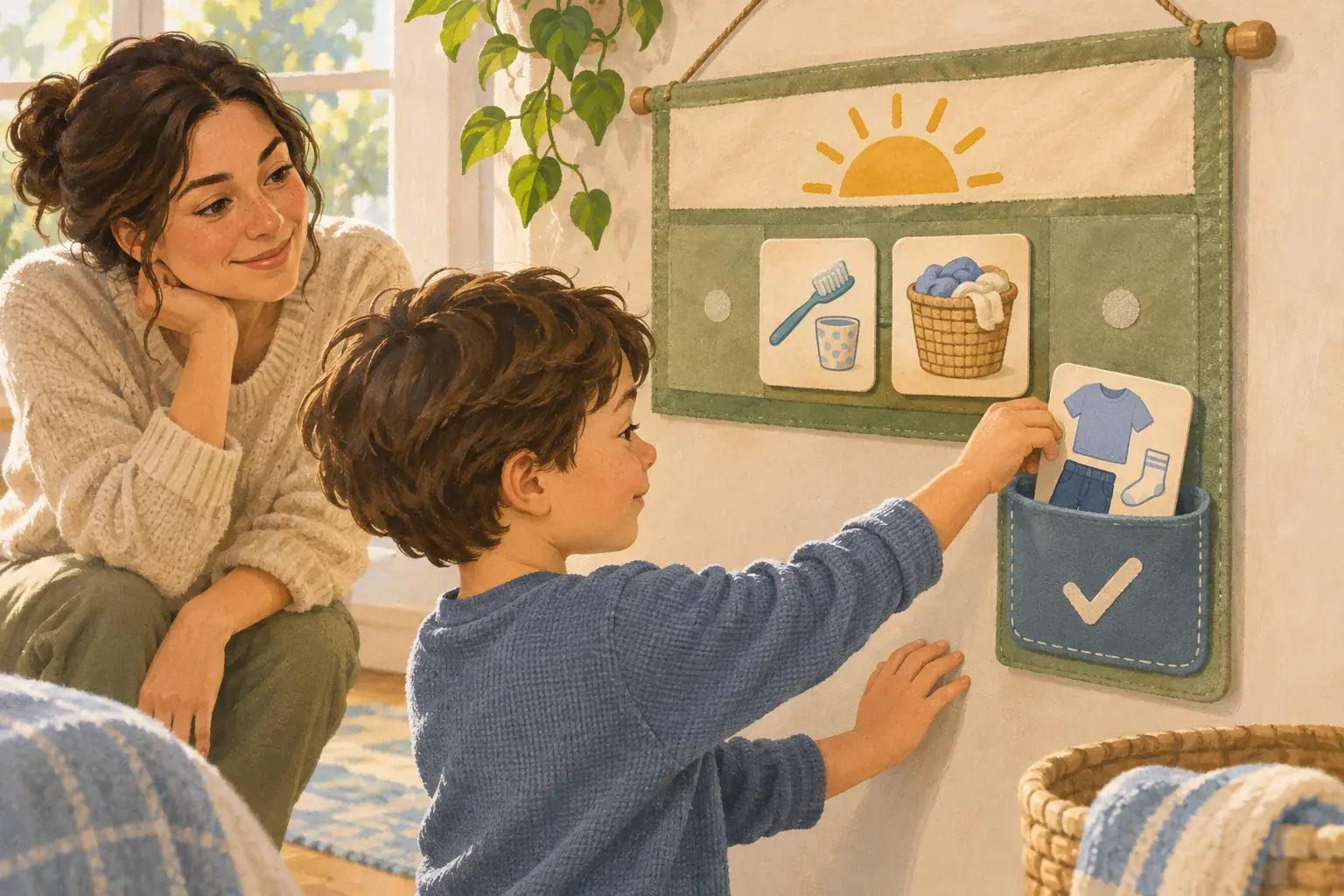
The chart does not need a reward system. Some families use praise or other routines, while others do not. Kids Daily Responsibilities Chart has no points or money feature; it is a printable board and picture cards. The useful question is whether the visual cue fits your family, not whether you have filled every space.
Why trust this guide?
Kids Daily Responsibilities Chart publishes printable routine tools for families. This guide was checked against American Academy of Pediatrics and CDC guidance on November 11, 2026. Those sources support predictable routines and age-aware chores, but they do not assess an individual child or your home's safety. An adult should choose and supervise the jobs.
You can read the about page for publisher information. The editorial policy explains how sources are checked, and you can contact the team with a correction.
How Kids Daily Responsibilities Chart fits a morning routine
Kids Daily Responsibilities Chart is a printable picture chart with Morning, Evening, and Done columns. It is one US Letter PDF and is not editable. Print it, cut out the cards, and choose which pictures belong in your routine. Cardstock is suggested; lamination and Velcro are optional.
The PDF includes picture cards from simple self-care routines to older-child household jobs. You choose what is suitable for your child and home. It has no app, points, or money feature, and one PDF provides one board. If you want a printable morning and evening chart with picture cards, you can use its spaces for a small routine and leave the rest blank.
For more ideas on setting up picture cues, read the guide to a picture chore chart or the example morning and evening set for a five-year-old. Keep the sequence specific to your family and let an adult handle safety and final checks.
Frequently asked questions
What should go on a morning routine chart for kids?
List only the steps your child needs to see before leaving home. Common examples include getting dressed, brushing teeth with an adult nearby, putting pajamas in the hamper, and getting shoes. Choose tasks that fit your child and your family's actual morning.
How many steps should a child's morning routine chart have?
There is no required number. Start with the few steps that cause the most confusion, leave empty spaces, and add another only when the current sequence is familiar. A chart with six spaces does not mean you need to fill all six.
How do I make a morning chart for a child who cannot read yet?
Use a clear picture for one familiar action, then point to it and practice the task together. Keep the adult close for care, safety, and reminders. A picture can cue a step after you have taught it, but it does not replace teaching.
Should the chart include breakfast?
Include breakfast only if a visual prompt helps your family remember that part of the routine. Keep food preparation and any hot items with an adult. The chart should match your real household sequence, not a fixed list for every family.
Where should I put a morning routine chart?
Place it where your child can see and reach it near the routine, such as by the bedroom or bathroom. If the steps happen in different rooms, put it near the first step or use it as a simple sequence to check together.
What if my child still needs reminders?
Keep reminding and practicing while the routine is new. Check whether each picture is clear, the step is familiar, and the board is easy to see. Remove or split a confusing step rather than expecting the chart to make reminders disappear.
Can I use one chart for siblings?
A shared family sequence may work, but each child needs tasks that fit their abilities and supervision needs. The Kids Daily Responsibilities Chart PDF is one board, so it is not a separate chart for each child.