Chore Chart for a 5 Year Old: A Morning and Evening Set
Chore chart for a 5 year old: choose a few safe morning and evening jobs, teach each picture, and set a routine that fits your school day.
By Kids Daily Responsibilities Chart by Cosmo Suite · Editorial policy
Published · 8 min read
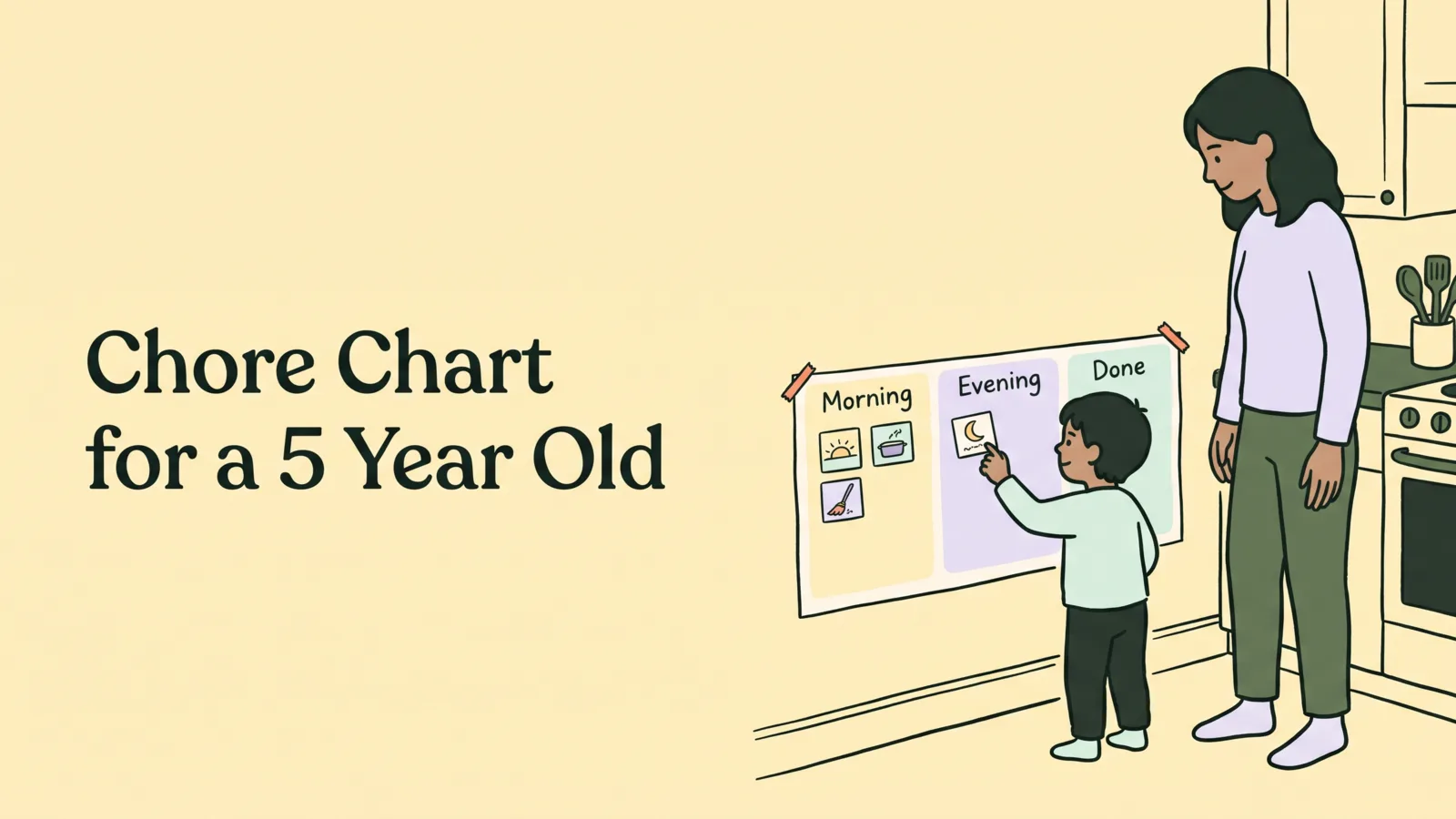
A five-year-old may be ready to help with familiar jobs, but a long list can make the morning harder. A useful chore chart for a 5 year old starts with a few actions the child already knows, then shows when each one belongs.
A chore chart is a visual list of jobs and their status. A picture chore chart uses images to show each job, so a child can use the prompt before reading independently.
Try a short before-school row and a separate evening row. Teach each picture, put the board near the routine, and let your child move a finished card to Done. You choose the jobs and keep supervision with the adult. The sample below is a starting point to adjust to your child's skills and your school-day timing.
Key takeaways:
- Begin with familiar jobs and leave unused spaces empty.
- Separate morning jobs from evening jobs when the timing differs.
- Teach one picture and one action at a time.
- Keep safety, reminders, and final checks with the adult.
What chores are a good fit for a 5 year old?
Start with simple household tasks the child can practice with your help. The American Academy of Pediatrics groups examples such as putting toys away, placing dirty clothes in a hamper, sorting laundry, and setting or clearing the table in its 5 to 7 years list. Those examples are options, not a checklist every five-year-old should complete.
The CDC's five-year milestones include simple chores, such as matching socks or clearing the table after eating. A milestone describes what most children can do by that age. It does not mean every child is ready for every household job, or should do it alone.
| Job to consider | Where it may fit | Adult check |
|---|---|---|
| Put toys away | Evening | Keep small parts away from younger children and show where each toy belongs |
| Put dirty clothes in a hamper | Morning or evening | Use a reachable hamper and handle heavy loads yourself |
| Sort clean socks | Evening | Start with a small, easy-to-match pile |
| Clear unbreakable dishes | After a meal | Remove hot, sharp, glass, or heavy items first |
| Brush teeth | Morning and evening routine | Stay involved in dental care and follow your dentist's guidance |
Choose only tasks that make sense in your home. If your child needs you beside them, the job can still belong on the chart. The picture gives a cue; it does not turn a supervised task into an independent one.
If you want the jobs split by time of day, a printable picture chore chart with Morning and Evening rows gives you a paper place to put the prompts.
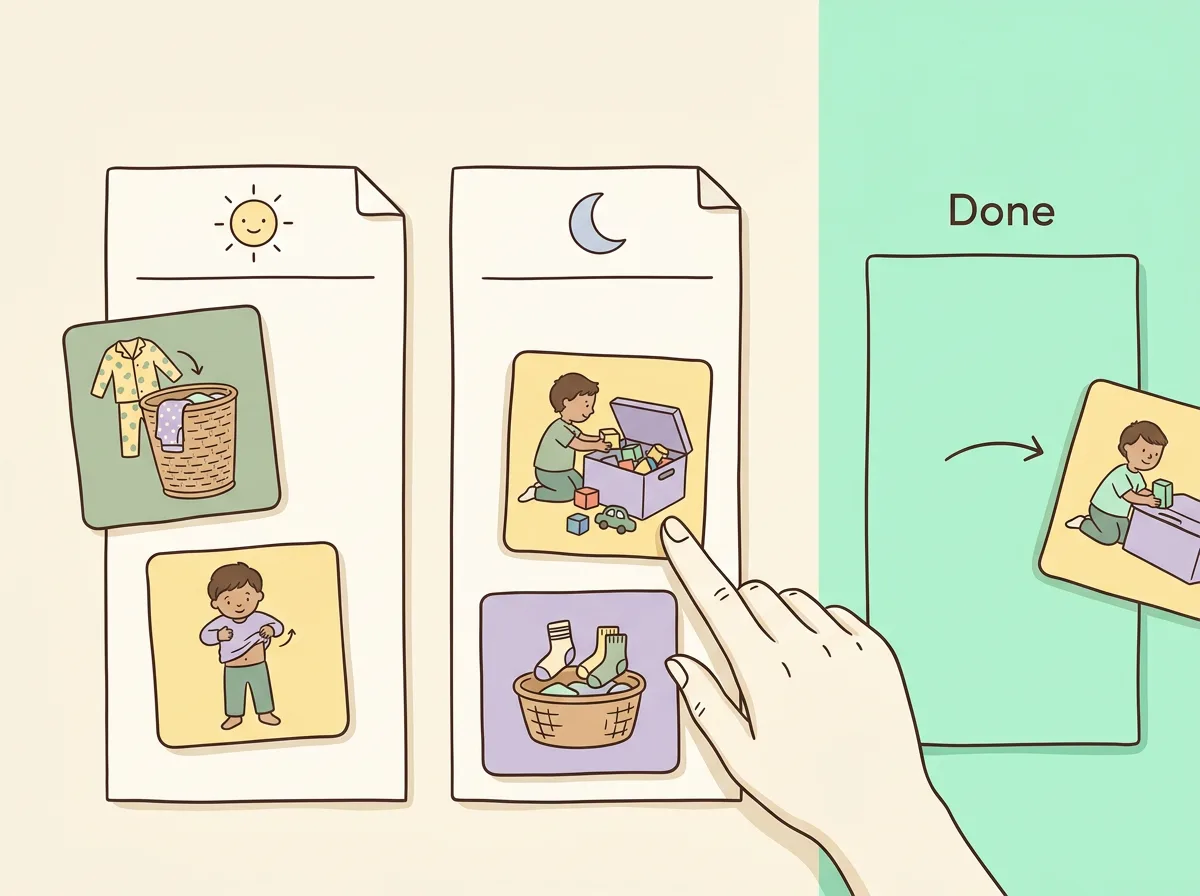
The picture chore chart guide for children who cannot read yet shows how to teach a single image as one action.
How do you build a morning and evening set?
Use the same few steps in the same order when that matches your day. A five-year-old does not need to fill every space. Start with jobs that already happen, and keep tasks that need adult judgment or equipment off the child's list.
Here is a sample set to adapt. It uses familiar jobs, not a recommended number or fixed routine:
| Morning, before school | Evening, after dinner or before bed |
|---|---|
| Put pajamas in the hamper | Put toys in their home |
| Get dressed, with help if needed | Put dirty clothes in the hamper |
| Brush teeth with an adult nearby | Set out tomorrow's clothes with an adult |
| Put shoes by the door | Sort a small pile of clean socks |
| Carry a light, safe item to the table | Clear unbreakable dishes after a meal |
| Check the school bag with an adult | Brush teeth with an adult nearby |
You can remove any step that does not fit. A school bag may be an adult's responsibility in your home, and getting dressed may already happen without a prompt. List only the jobs your child will really do. The chart can stay partly empty.
Keep the first step easy to spot. If the child gets stuck before school, put the picture for the first job at the top of the Morning row. For evenings, place the first card beside the place where the routine begins. Children can learn the sequence through repetition, but they may still need reminders.
How should you teach the chart without taking over?
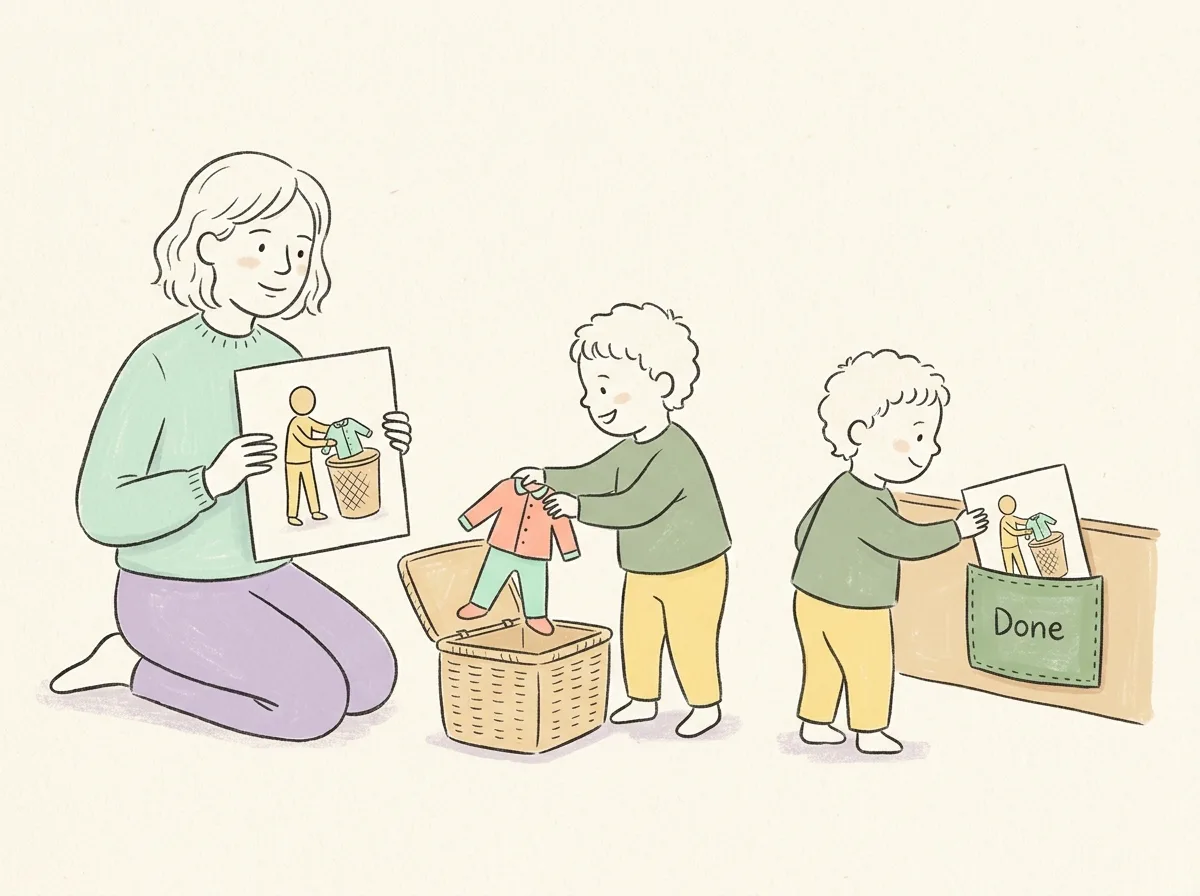
Show the job and the card together before expecting your child to use the chart. A picture may be clear to you and still need explaining. Name the action in a few words, do it together, then let your child try while you stay close enough to help.
- Pick one familiar job, such as putting pajamas in the hamper.
- Point to its picture and say the action plainly.
- Show where the clothes go and let your child try.
- Help them move the card to Done when the task is finished.
- Repeat the same steps before adding another picture.
The CDC's preschool guidance recommends showing children the behavior you expect and letting them help with simple chores. Make the direction specific. “Put these pajamas in the hamper” gives one clear action; “get ready” can mean several things.
Your child may move the card before the job is complete, forget the move, or ask you what comes next. Treat that as a cue to practice or simplify the routine. The chart can support your reminders while the child learns. It cannot promise that reminders will stop.
How many spaces should you fill?
Fill only the spaces you need for a routine that already exists. A board with six Morning and six Evening slots offers room to arrange picture cards, but empty spaces are useful. They help you keep the chart readable and leave room for a job your child is learning later.
If the morning feels rushed, choose one or two child-sized actions and keep the rest of the routine with the adult. If the evening is already familiar, you may start there instead. Use the printable morning and evening chore chart for separate rows and a Done area for moving finished cards.
Add a task only after your child understands the current ones and you can keep the setup going. If the chart becomes another list you must rewrite every day, remove steps or use the same routine for longer. Keep only the jobs your family can repeat without remaking the chart each day.
How can you fit chores around the school run?
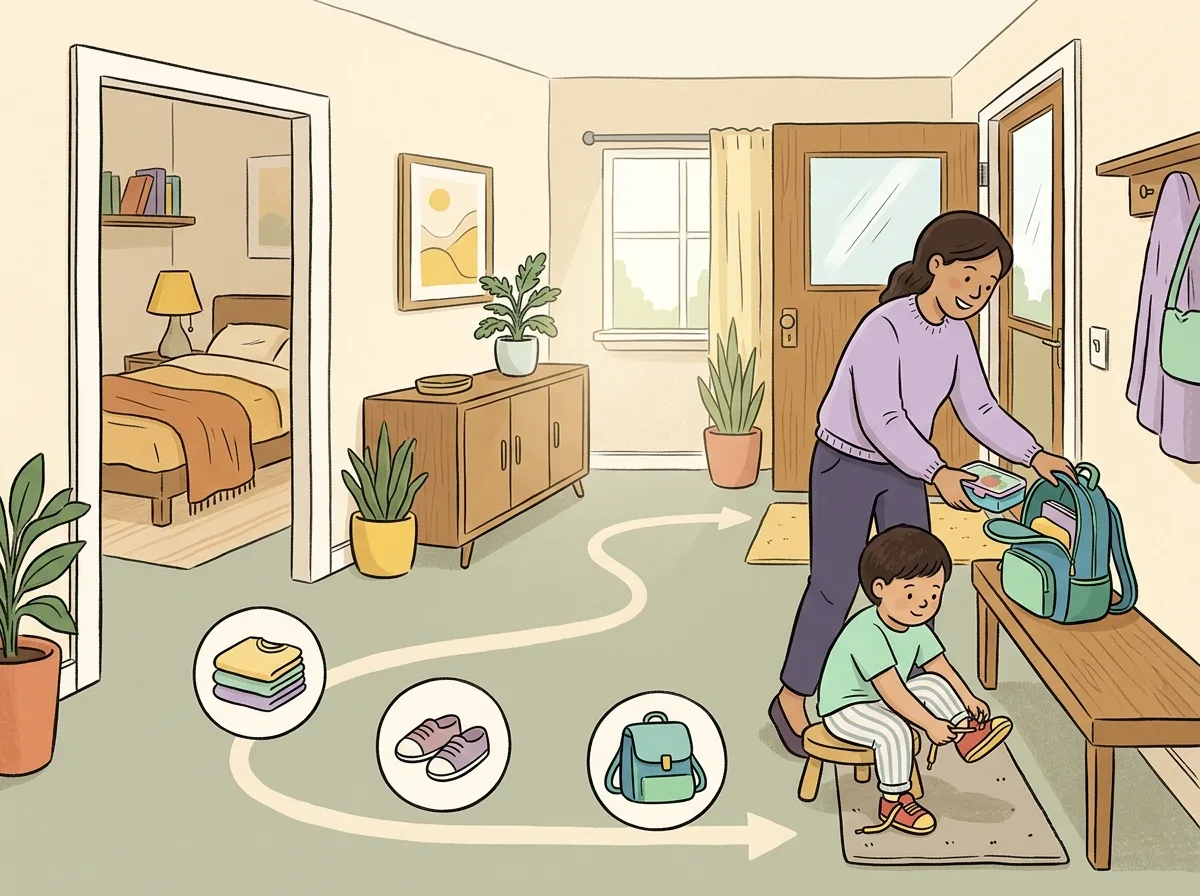
Keep the chart beside a transition your family already follows. If your child goes from the bedroom to the bathroom, then gets dressed, place the Morning pictures in that order. Put the school bag check near the exit, where you can do it together. The chart should reflect the route through your home, not an ideal schedule from another family.
Leave time-sensitive adult tasks off the child's row. A five-year-old can help put shoes by the door, while you remain responsible for checking the weather, packing anything needed, and leaving on time. If a task regularly creates a delay, move it to the evening or take it off the chart.
On a weekend or a day without school, you can leave the school-related spaces blank. The row is a reminder for your usual routine, not a promise that every day will look the same. Explain the change simply and reset the cards when the normal schedule returns.
Which jobs should stay with an adult?
Keep jobs involving heat, sharp tools, cleaning products, heavy loads, or machinery under adult control. The picture cards include a range of jobs for different ages, but a card does not decide whether a task is safe for a particular child.
For a five-year-old, think about the actual action, not only its label. “Help with dishes” could mean carrying a plastic cup or reaching near a hot pan. Those are different tasks. Set out safe items first, and handle anything breakable, hot, or sharp yourself.
The AAP's age list includes chores such as setting the table, sorting laundry, sweeping floors, and filling a pet's food dish for children ages 5 to 7. Your child still needs instruction and an adult to decide what is appropriate. Keep feeding routines supervised if a pet may grab food or scratch, and ask your veterinarian about household-specific risks.
What makes a chore chart easier to keep using?
Put the board where the routine happens and make the finished step physical. For example, a child can move “put toys away” from the Evening row to Done after the toys are in their bin. You can see what remains without rewriting a checklist.
Reset the cards at a time that already exists, such as after bedtime or before breakfast. Reset together at first so the child learns where each card returns. If a card disappears or the row gets crowded, reduce the set until the board is easy to scan.
A paper chore chart with a movable Done area can keep finished cards visible until you reset the routine.
Why trust this article?
Kids Daily Responsibilities Chart publishes practical guidance for parents using printable routine tools. The age examples above come from the American Academy of Pediatrics and the CDC, checked on November 10, 2026. Those sources offer general examples and milestones, not an assessment of your child or a safety review of your home. Choose tasks with your own child's abilities and supervision needs in mind.
Read the about page for publisher information. Our editorial policy explains how we check sources, and you can contact the team with a correction or question.
How Kids Daily Responsibilities Chart fits a five-year-old's routine
The Kids Daily Responsibilities Chart is a printable picture chart with Morning, Evening, and Done areas. Its picture cards cover jobs from toddler routines to older-child household tasks. The file is a US Letter PDF. You print and cut the cards; cardstock is suggested, while lamination and Velcro are optional.
Choose only the pictures that fit your child and home. Empty spaces can stay empty. The child can move a finished card to Done after you have shown what the job means and decided that it is safe. The chart does not remove the adult's role in teaching, reminding, or checking.
If you want picture prompts and a place to move finished jobs, the Kids Daily Responsibilities Chart printable gives you the three areas on paper. You will need to print and assemble the PDF before using it.
Frequently asked questions
How many chores should a 5 year old have on a chart?
There is no fixed number for every child. The chart has six Morning and six Evening spaces, but you can begin with only a few familiar jobs and leave the rest empty. Add a job when your child understands the current routine and you can supervise it safely.
What chores are suitable for a 5 year old?
The American Academy of Pediatrics lists examples for ages 5 to 7 such as putting toys away, placing dirty clothes in a hamper, sorting laundry, and setting or clearing the table. Choose based on your child's abilities, the task, and the help available at home.
Can a 5 year old follow a chore chart without reading?
Yes, if you teach what each picture means. Point to one card, name the action, and practice the job together. A picture can remind your child of a familiar step, while you stay available to help and check the result.
Should morning and evening chores go on separate rows?
Separate them when the jobs happen at different times. A Morning row can show the steps before school, and an Evening row can show a few jobs after dinner or before bed. Keep the order flexible for your family's schedule.
What if my 5 year old forgets to move a finished card?
Show the move as part of finishing the job. Walk through the task, then help your child move its picture to Done. You may still need to remind them while the routine is new. If the move is easy to forget, keep the board where the job happens.
Should a chore chart include rewards?
No reward system is required. A chart can show the jobs and where each finished card goes. If your family uses rewards, decide that separately. The printable itself has no points or money feature.
Can I use the same chart for siblings?
A family can share a routine, but each child's jobs still need to be clear and appropriate for them. If siblings need separate job lists, give each child a clear set of picture prompts.