Chore Chart for a 3 Year Old: Start With 2 or 3 Picture Jobs
Chore chart for a 3 year old: pick two or three familiar picture jobs, practice together, and leave safety and reminders in the adult's hands.
By Kids Daily Responsibilities Chart by Cosmo Suite · Editorial policy
Published · 7 min read
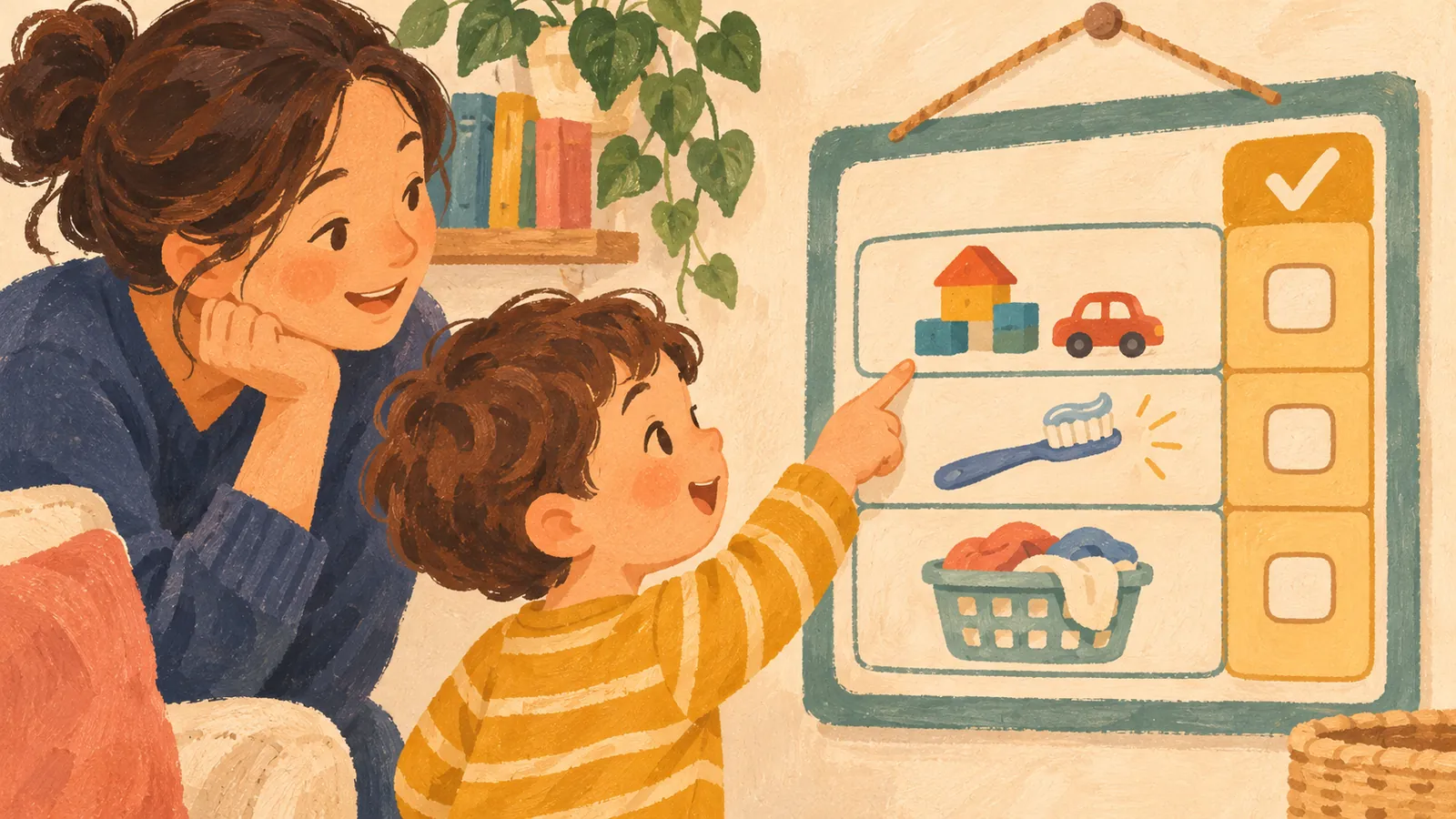
When you have to point out every job, you may wonder if a chore chart is too early. A long list takes time to teach, and a label like “get ready” can hide several separate steps. Try two or three jobs your child already sees you do. Give each picture one clear action.
A chore chart for a 3 year old works best as a shared prompt. Your child can learn to recognize a familiar picture and move it when a job is finished. You still choose what is safe, show how each task works, and help when needed. Two or three starter jobs are a useful trial, not a rule for every child.
Key takeaways:
- Pick two or three familiar jobs to try first.
- Give each picture one clear action.
- Practice the job together before relying on the picture.
- Keep safety and supervision decisions with the adult.
How many chores should a 3 year old have?
Begin with two or three jobs that already fit your day. That small set lets you see whether the child understands the pictures and whether the routine is easy for you to keep. It is a practical starting point, not a number recommended by pediatric guidance.
Choose jobs by familiarity and safety. A child may enjoy helping with a routine they see every day, but ability varies from child to child. The American Academy of Pediatrics says most preschool-age children can begin simple household tasks. Its examples of putting toys away and placing clothes in a hamper appear in the 5–7 age group, so do not treat them as a three-year-old checklist.
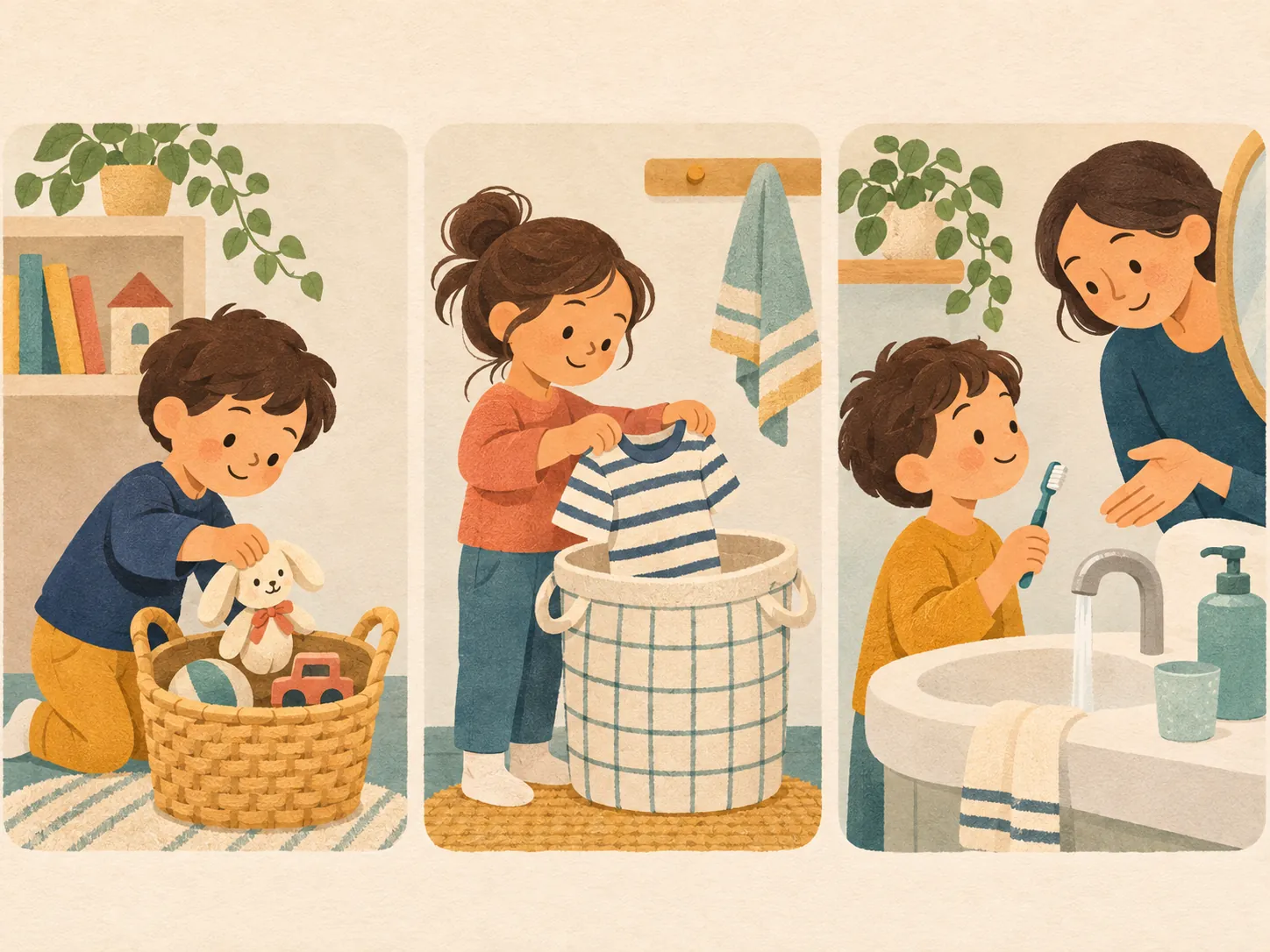
| Starter job | What one picture can show | Adult's part |
|---|---|---|
| Put toys in a basket | A toy going into its storage spot | Choose toys that are safe to handle and show where they belong |
| Put clothes in a hamper | A shirt being placed in the laundry basket | Keep the hamper within reach and handle heavy or tangled loads |
| Brush teeth with help | A toothbrush beside a sink | Stay nearby and follow your usual dental-care routine |
Treat the table as a menu, not a prescription. Pick the jobs your child already practices with you. If one task turns into several steps, such as “clean your room,” choose one small action for the chart or leave it off for now.
The picture chore chart guide for pre-readers explains how a single image can cue a familiar job. A visual cue works after you teach it. It does not mean a three-year-old is expected to complete every task alone.
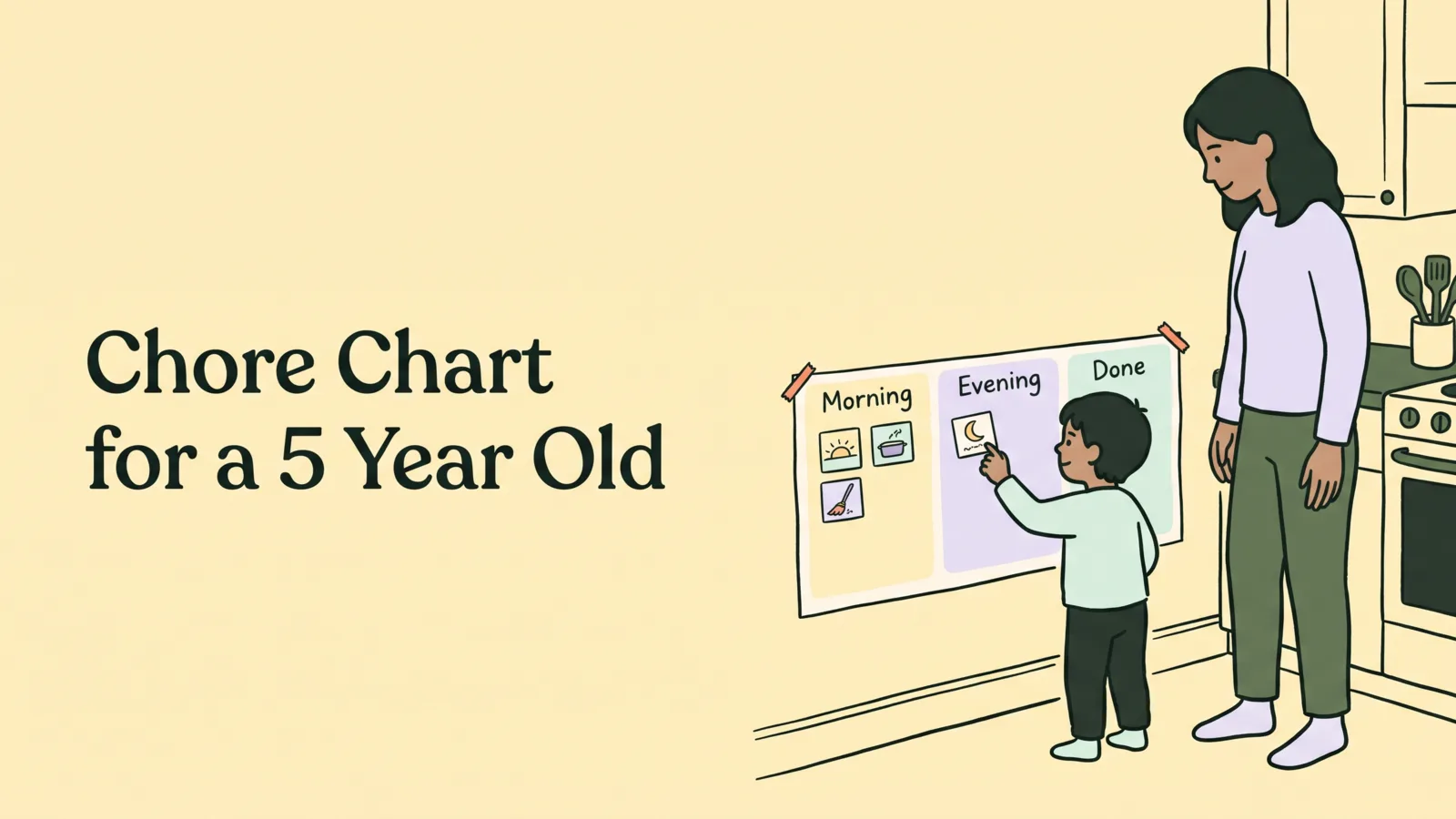
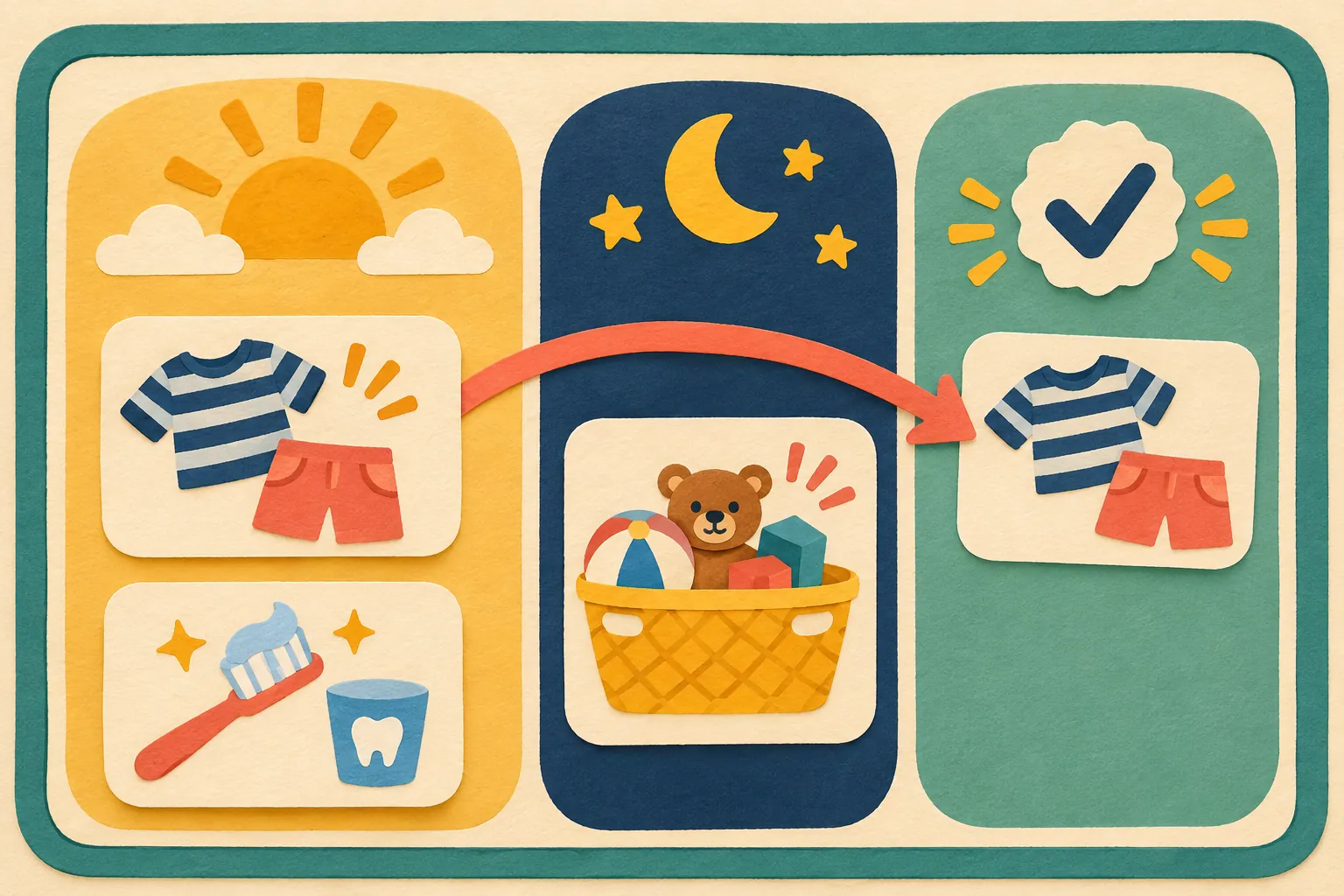
Want the morning, evening, and finished spaces on one printable? The Kids Daily Responsibilities Chart picture board has all three columns.
What should go on a chore chart for a 3 year old?
Use pictures for everyday actions your child can see and practice. A picture chore chart is a visual prompt that connects one familiar task with an image. The CDC's positive parenting guidance for ages two to three says children at this stage should be able to follow simple instructions and imitate adults. Those milestones can help you think about a task, while your own child and home determine how much help is needed.
Start with something concrete: a toothbrush, a shirt, or a toy basket. A picture of “help out” is too broad because it does not show what to do. If the job is “put toys away,” the picture should point to the familiar toy and its storage place, not suggest that the child tidy an entire room.
Keep the action stable while your child learns it. If pajamas usually go in one hamper, use the same place and phrase each evening. You can change the task later, but frequent changes make the chart harder to recognize. For a child who cannot read yet, consistent pictures and words from the adult help connect the image to the job.
How do you teach a child to use the chart?
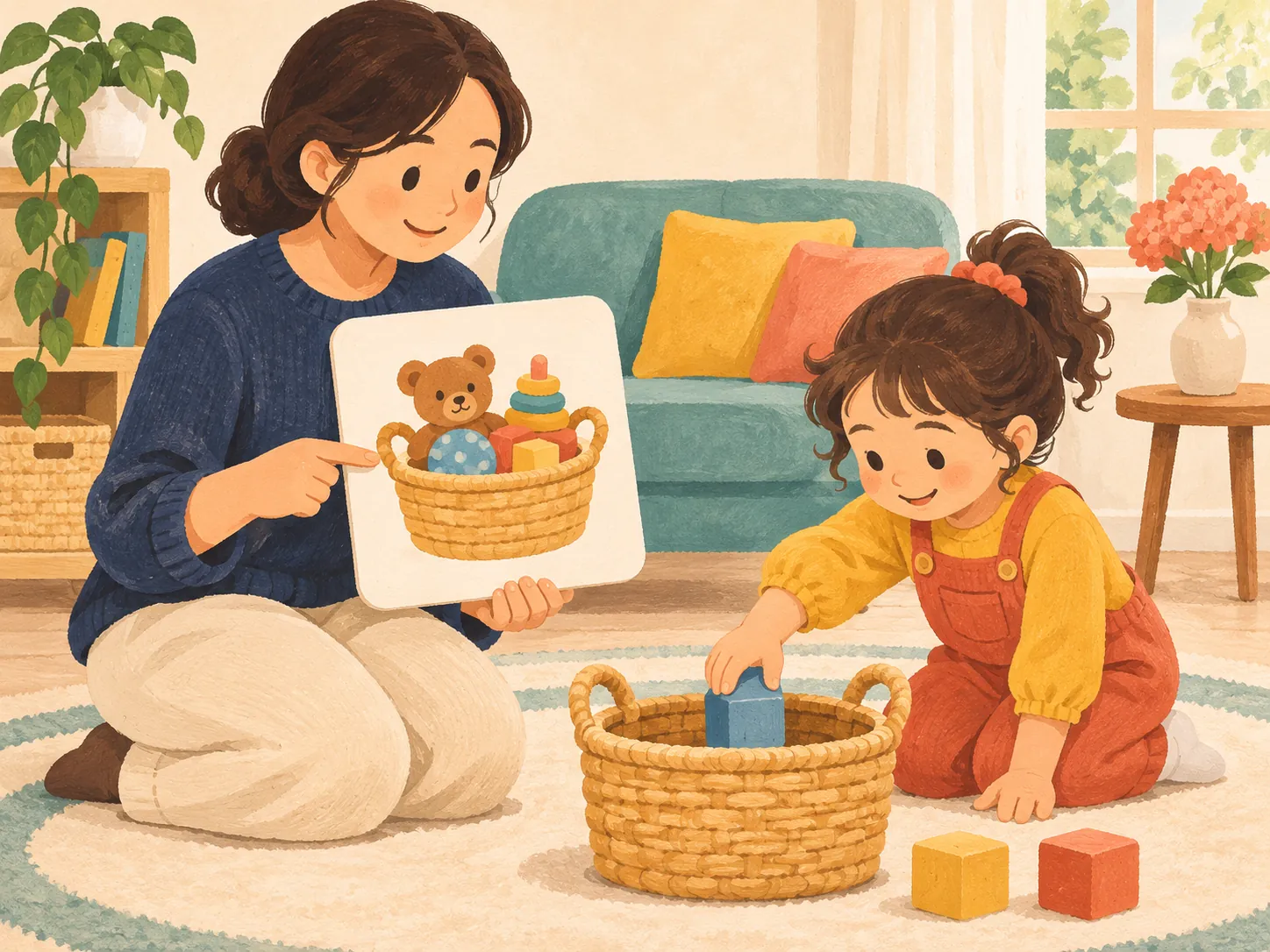
Show the picture, name one action, do it together, and let your child try. When the job is finished, show where the card goes. This short practice links the picture to the task and the task to a clear ending.
For example, point to the toy-basket picture after play. Say, “Put these blocks in the basket,” and demonstrate with one block. Let your child place the next one. When the agreed task is done, help them move the picture to Done. The picture marks the step. You check that the job is complete.
The CDC lists following simple instructions and imitating adults among milestones for ages two to three. Those milestones cover a broad age group and leave chore choices to the adults who know the child and home. Keep directions short and adjust them to your child. If a picture is confusing, explain it again or choose an image that matches the object and place more clearly.
Put the chart where the job happens and where your child can see it. A card near the bathroom may help cue brushing teeth. A chart hidden in a kitchen drawer cannot serve as a visible reminder during the routine. You can point to it at first; independence is something the child practices over time.
Which chores need adult supervision?
Every job on a three-year-old's chart needs an adult to decide whether it is suitable. A task that sounds simple can involve a hazard in one home and be manageable in another. Review the objects, the room, and the kind of help your child needs before you add a picture.
Keep cleaning liquids, medicines, sharp utensils, hot appliances, and heavy objects under adult control. Do not use a chart to turn pet feeding, outdoor work, or kitchen tasks into unsupervised duties. If your child helps, stay with them and handle the risky part yourself.
The AAP's chore guidance encourages simple tasks, clear directions, and adult supervision. Your judgment still determines what is safe for this child and household. Remove a card if the job becomes unsafe, frustrating, or too complicated. A blank space is better than a task your child cannot yet do safely.
Should jobs go in the morning or evening column?
Use separate groups when they help your child see which familiar jobs happen at each part of the day. Put getting dressed or brushing teeth with the routine where it belongs in your home. Keep an occasional task off the daily set so the same pictures remain predictable.
For a first try, you might use one morning job and one evening job, then add a third if the routine feels manageable. There is no benefit to filling every chart slot. A small set gives you room to show a new action later without turning the board into a list of everything a child might do.
Kids Daily Responsibilities Chart has Morning and Evening columns, plus a Done column. Its 35 picture cards range from toddler jobs such as potty and brushing teeth to older-child jobs such as laundry and yard work. Choose only the cards that fit your child. The chart is one printable board, not an individual board for each sibling.
What if your child stops using the chore chart?
Check the picture and the task before adding more reminders. Your child may not know what the image means, may need help with a step, or may not be able to reach the board. Show the task again, make the picture more specific, or remove the job until it is a better fit.
Keep the starting set steady long enough for your family to practice it. If you change the jobs every day, your child has to learn a new routine each time. If the chart needs frequent rewriting or you are doing all the moving, reduce the list and reset the cards together at a time you already have available.
Continue giving reminders while your child is learning. A chore chart can make the next step visible, but it cannot guarantee that a preschooler will notice it or finish without help. Use the picture alongside your usual calm instruction. A printable picture chart with a Done space can keep finished cards visible while you practice.
Why Trust This Article
Kids Daily Responsibilities Chart is a Cosmo Suite printable, and our team built the chart described here. We checked the American Academy of Pediatrics and CDC pages on November 8, 2026. Neither source sets one chore list for every three-year-old. A parent or caregiver must decide what is safe for the child and home. Read more about who publishes this guide and how our editorial process works.
How Kids Daily Responsibilities Chart Fits In
Kids Daily Responsibilities Chart is a printable option if you want picture prompts and separate Morning, Evening, and Done columns. The PDF is US Letter and includes 35 picture cards. It is not editable, and it has no app, points, or money built in.
You print the page, cut out the cards, and choose which jobs belong in your child's routine. Cardstock is suggested. Lamination and Velcro are optional. Start with only the pictures you can teach and supervise, and leave the other spaces empty. See the Kids Daily Responsibilities Chart picture board if this format fits the way your family handles daily routines.
The chart can show a familiar action and where its card goes next. You remain responsible for choosing the task, teaching it, and checking that it is safe. If your child needs more help, keep practicing together and adjust the chart to match.
Frequently asked questions
How many chores should a 3 year old have on a chart?
Start with two or three jobs your child already knows, then see how the routine goes. This is a practical first try, not a developmental rule. Keep tasks your child can practice safely with the help they need. Empty spaces are fine.
What chores can a 3 year old do?
Try simple steps your child already sees, such as putting away toys or helping with a familiar self-care routine. Choose based on the child and the home, and stay close enough to help. Keep sharp tools, cleaning products, hot surfaces, and heavy items off a young child's job list.
Can a 3 year old follow a chore chart if they cannot read?
Yes. First show your child what the picture means. Point to one card, name the action, and practice it together. The image can help your child remember a familiar step after you have taught it.
Should a chore chart for a 3 year old include rewards?
No. A chart can show the routine and where a finished card goes without points or money. If your family uses rewards, decide that separately. They are not a required part of the chart.
What if my 3 year old ignores the chore chart?
Check that the picture is clear, the task is familiar, and your child can reach the chart. Show the action again or take off a step that needs too much help. Keep reminding your child while they learn the routine.
Should chores be split between morning and evening?
Put them in separate groups if morning and evening jobs happen at different times. The morning group might cover a few steps before you leave home. The evening group can show a familiar wind-down task. Leave empty spaces when you do not need them.
Can one chore chart work for siblings?
A family can share a routine, and each child still needs a clear job that fits their abilities. The Kids Daily Responsibilities Chart PDF contains one board. If each child needs an individual chart, you will need a separate copy.