Picture Chore Chart: How Kids Who Can't Read Run Their Own Jobs
A picture chore chart works best with a few clear jobs, separate morning and evening routines, and a Done spot where children move each finished picture.
By Kids Daily Responsibilities Chart by Cosmo Suite · Editorial policy
Published · 8 min read
When the morning is already moving, a written chore list can turn into one more thing you have to read aloud before the day starts. A young child may know the job after you explain it, but still need you to point to the same line tomorrow. Then the evening jobs begin, and the reminders start again.
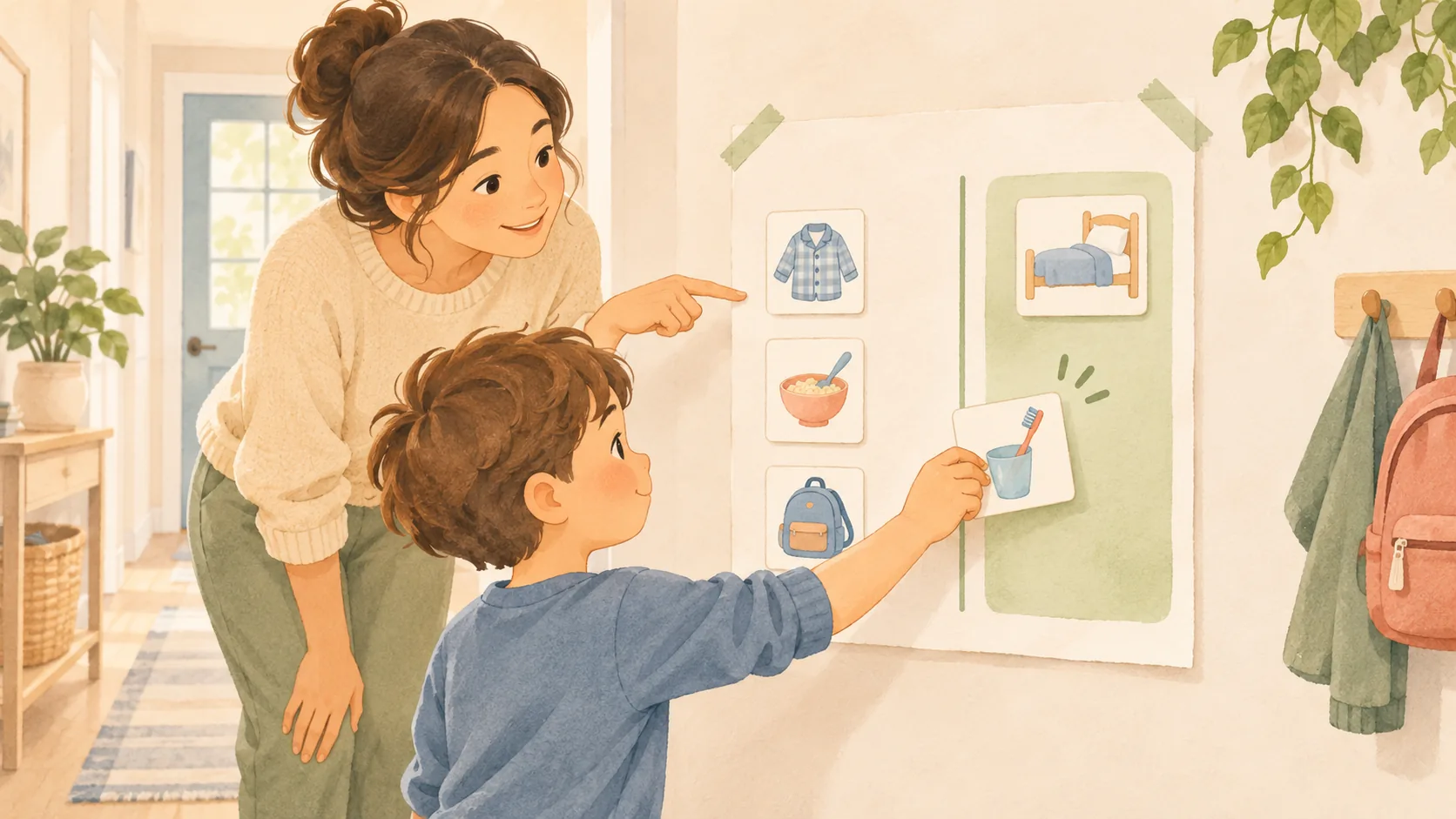
A picture chore chart makes the next job visible. It works best when each picture stands for one familiar task, the routine stays small, and a finished job has a clear place to go. That does not make a child responsible for everything or guarantee a reminder-free day. It gives your family a steady prompt to practice together.
Key takeaways:
- Use pictures for jobs your child already knows how to practice.
- Keep morning and evening tasks in separate groups.
- Let the child move a finished card, then reset the board together.
- Keep adult supervision and safety decisions with the adult.
What a picture chore chart should show
A picture chore chart is a visual list that uses images to show a child what to do. It answers three questions at a glance: what happens in the morning, what happens in the evening, and what is already done. Children who cannot read yet can follow a familiar picture after you have taught them what it means.
The chart is a reminder, not a lesson or a safety check. Show the task first, then use the picture to help your child remember the routine.
For example, a toothbrush picture can mean “brush teeth.” It should not mean “get ready for school” if that phrase includes several steps your child has not learned. A card with one clear action is easier to explain and repeat.
Picture chore chart formats at a glance
The best format depends on who has to read, rewrite, and reset it. Compare the upkeep as well as the look before choosing one.
| Format | What the child sees | Parent upkeep | Best for |
|---|---|---|---|
| Written checklist | Words beside each job | Rewrite or check that the list stays current | Readers who can follow short labels |
| Whiteboard list | Handwritten jobs and marks | Erase and rewrite when the routine changes | Families who change jobs often |
| Picture cards with a Done place | A job picture, then a visible finished spot | Teach the cards and reset them for the next routine | Pre-readers and children who benefit from a visual cue |
| App chore list | Jobs on a screen | Set up the app and manage its settings | Families who want a digital system |
Choose the simplest format your child can understand and your family can keep current. For a young child, pictures plus a place for completed jobs can make the sequence concrete without asking the child to read a paragraph.
Set up a morning and evening routine
Separate morning jobs from evening jobs so your child can look at the right group at the right time. The American Academy of Pediatrics recommends clear expectations and consistent routines; the CDC's routine guidance also advises keeping routines predictable and tailored to a toddler's or preschooler's abilities.
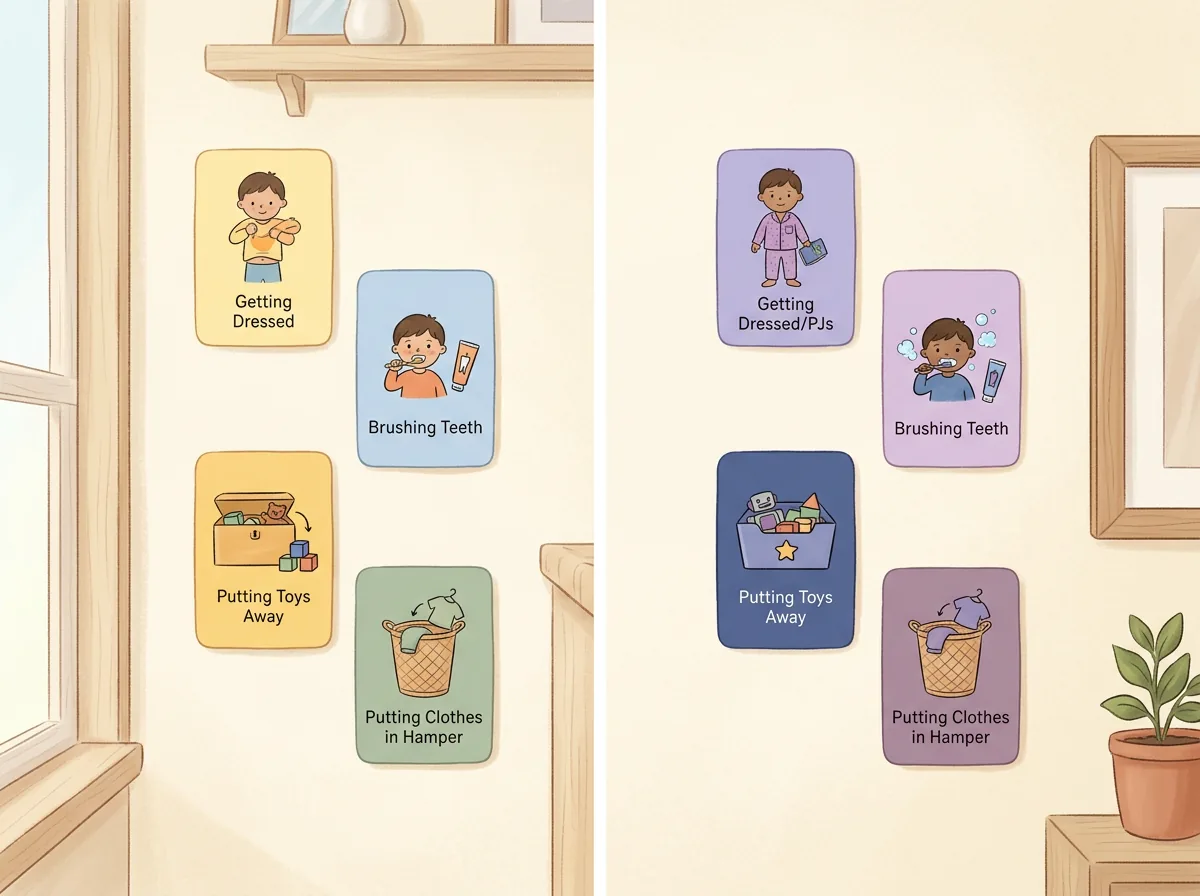
Start with the moment that causes the most reminders. If mornings are hard, choose a few jobs that already happen before leaving home. You might use pictures for getting dressed, brushing teeth, and putting pajamas or clothes in the hamper. The exact jobs depend on your child and your household.
Then consider the evening. Keep this sequence distinct from chores that happen only once in a while. A short, repeated set could include putting toys away, placing dirty clothes in a hamper, and brushing teeth. Do not add a task simply because it fits on the board.
The Kids Daily Responsibilities Chart printable has Morning and Evening columns with six slots each. You can leave spaces empty. A chart does not become more useful just because every slot is filled.
Teach each picture before using it as a reminder
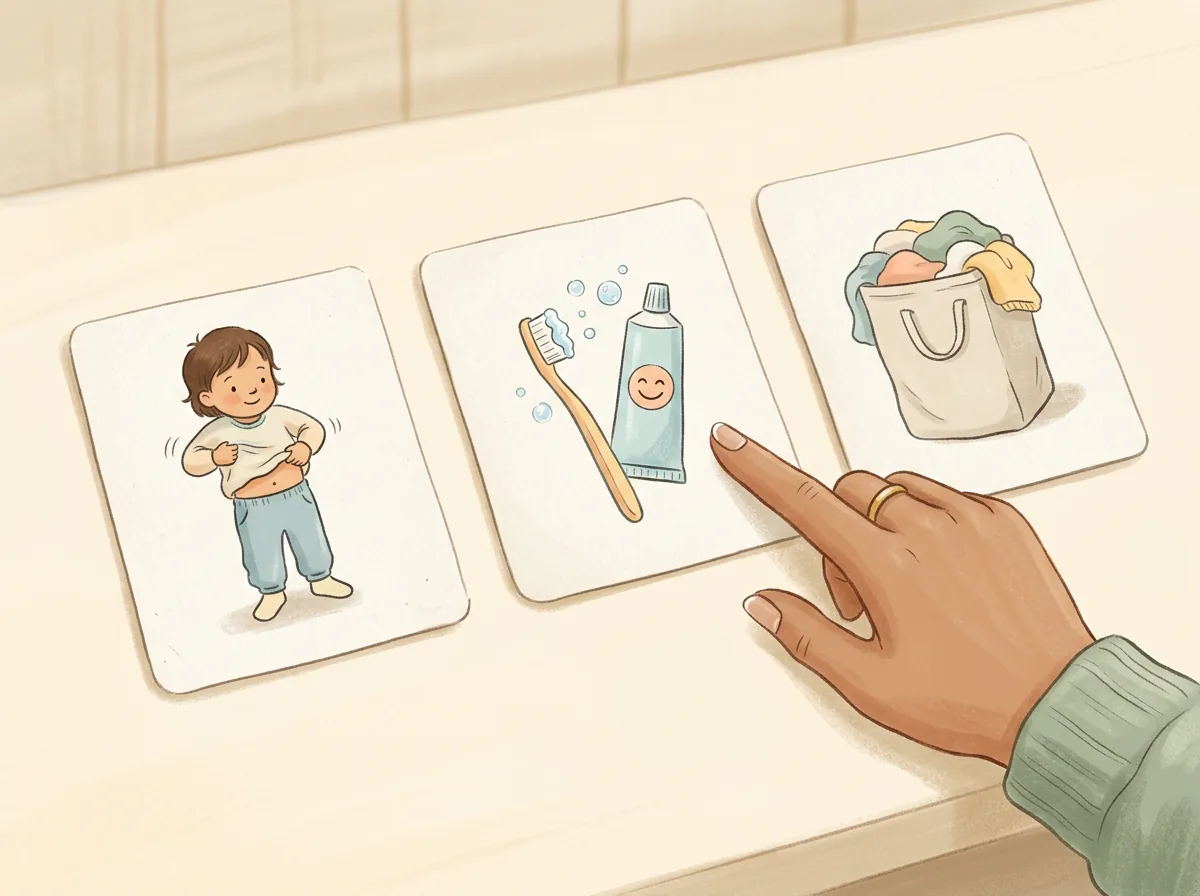
A picture cue is an image that reminds a child of one action they have already practiced. Hold up the card, say what the child should do, show the task, and let the child try it with you nearby. Use the same short phrase next time so the picture and instruction stay connected.
If a card stands for several jobs, choose which action it means before putting it on the chart. “Get ready” could mean dressing, brushing teeth, and finding a backpack. Those are separate actions for a young child. A chart can show each one as its own step if the routine needs that level of detail.
Check that the picture is easy to recognize and that the child can reach the board. If the child does not know what the card means, explain or demonstrate it again. Repeating “look at the chart” will not fill in a missing instruction.
Begin with a small, teachable set
Choose jobs your child can safely practice with the support they need. Age can help you think about a task, but it does not replace your knowledge of the child, the room, or the tools involved.
The American Academy of Pediatrics lists putting toys away among simple preschool-age chores and advises giving simple, step-by-step directions. The CDC says to tailor tasks to a toddler's or preschooler's skill level and assign only safe tasks. Treat both as starting points. Your child's skills and the task's risks decide what belongs on the chart.
For an example, imagine a preschooler who already knows the morning routine. Start with “get dressed” and “put pajamas in the hamper.” Practice each job with the child, then point to its picture when it is time to try again. Add another card only when the current pair is familiar enough to use.
For an older child, a family might consider a job such as sorting laundry or helping with dishes, if the child can do it safely and an adult has shown what to do. Keep hot appliances, sharp tools, cleaning chemicals, and heavy lifting under adult control. The chart should never make a risky task seem appropriate just because there is a picture for it.
Make “Done” part of the routine
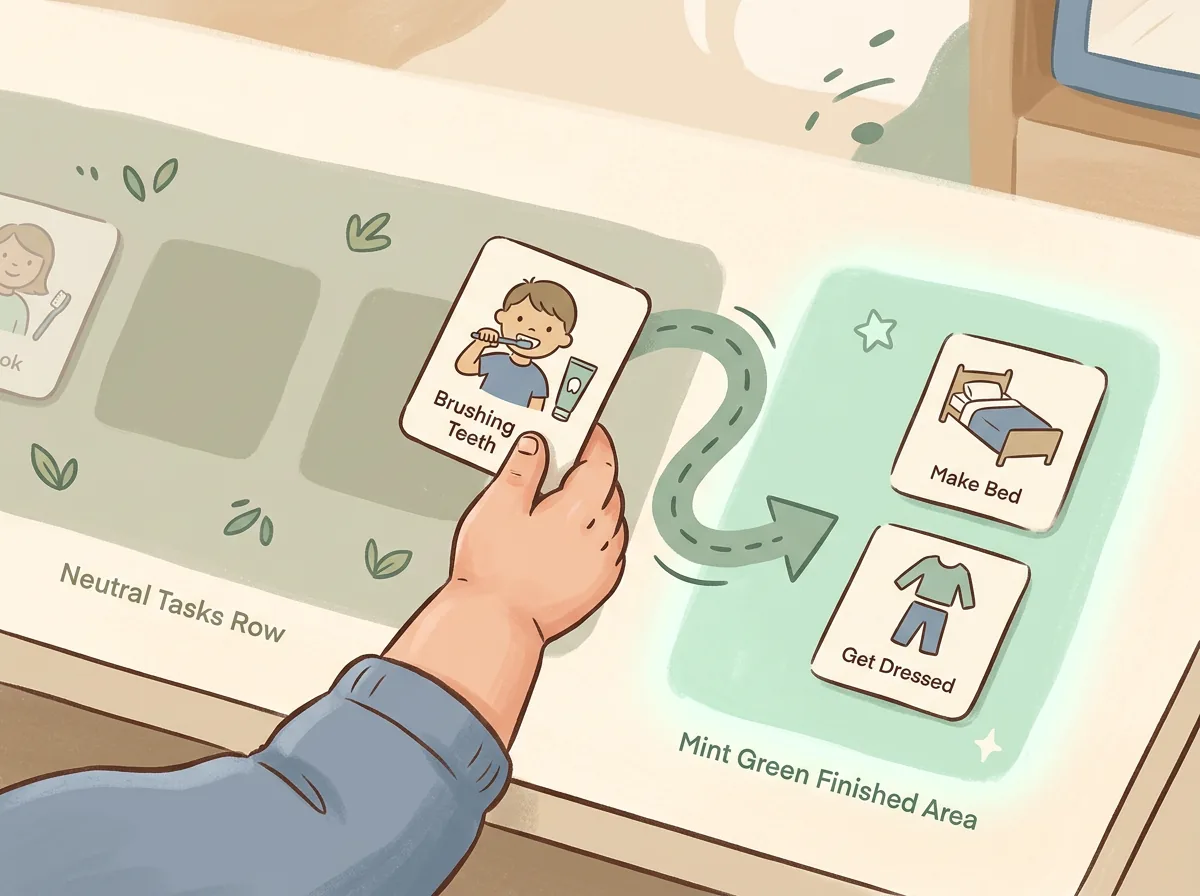
A Done area is a place for cards that represent jobs the child has finished. Without that destination, a row of pictures can show what to do but leave the child unsure how to mark progress.
Show the full loop once: look at a job picture, do the task, then move its card to Done. On the next routine, move the cards back to their starting positions together. This physical reset is simple, but it is still a family habit. A printable does not reset itself.
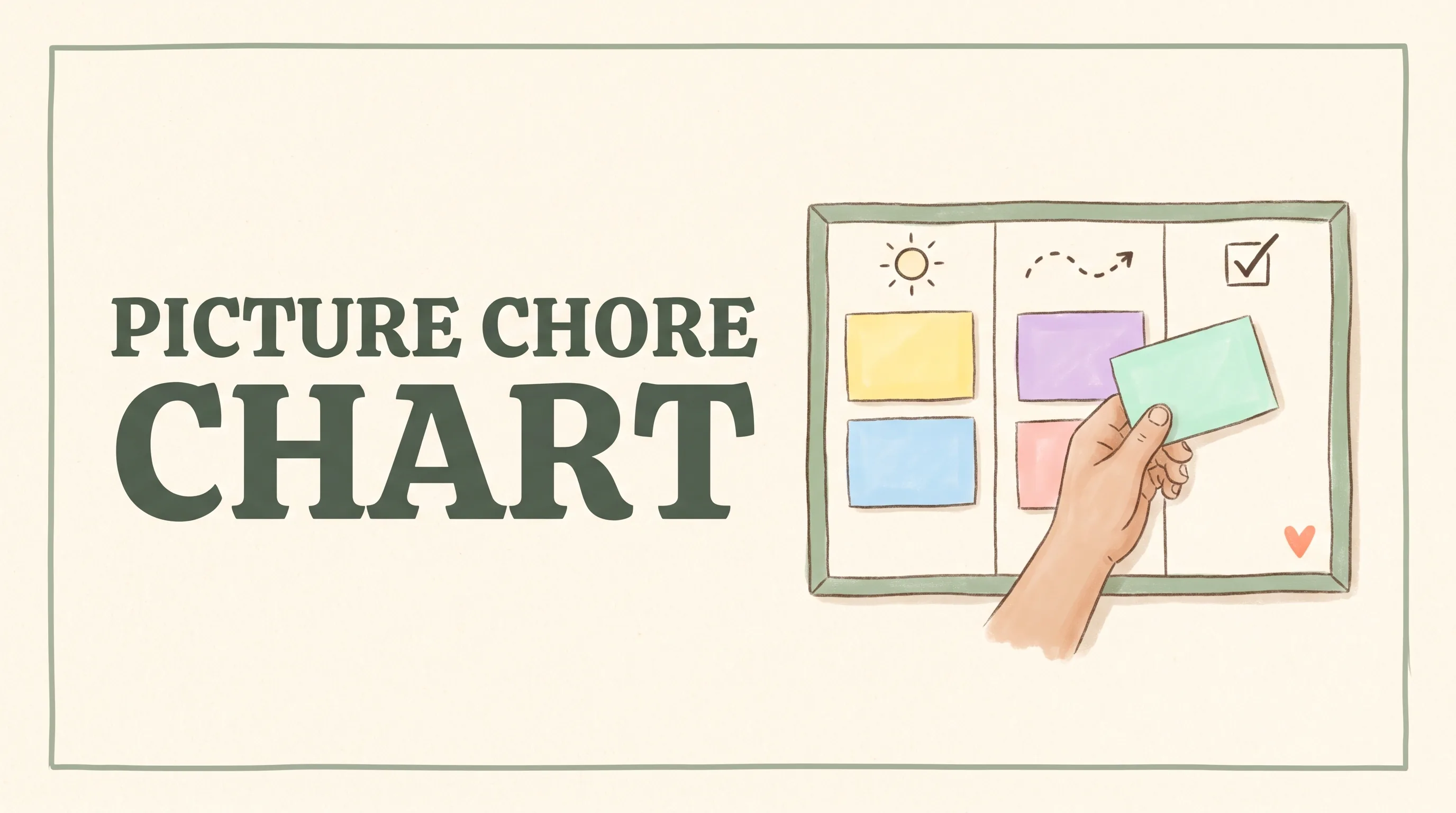
The Kids Daily Responsibilities Chart uses Morning, Evening, and Done columns. It includes 35 picture cards, from toddler jobs such as potty and brushing teeth to older-kid jobs such as laundry, dishwasher, pet care, and yard work. Choose only the cards that match the child and the home. The picture chore chart layout is a reference for how those three areas fit together.
If your child moves every card at once, review the task together and put the picture back where it belongs. Use the chart to practice the routine rather than score the child.
Why chore charts stop getting used
Charts often fade when the parent has to keep rewriting, redesigning, or explaining them. A routine that changes every day asks the adult to maintain the system and asks the child to learn a new one.
Keep the first version steady for a while. Put it near the place where the routine happens, such as by the bathroom for toothbrushing or near the bedroom for getting dressed. If cards are too small to recognize or the board is out of reach, fix the physical setup before adding more jobs.
When a card is ignored, check the task before blaming motivation. The instruction may be too broad, the child may not know the steps, or the job may be difficult to do without help. Split the task, demonstrate it again, or remove it until the child is ready.
The AAP advises avoiding an overloaded list and introducing a new task one at a time for a school-age child who is new to chores. CDC guidance similarly calls for routines suited to a child's capabilities and understanding. Reducing the list can be a sensible adjustment, not a sign that the chart failed.
What makes the chart easier to keep using
Make the child’s next action visible and make the adult’s reset predictable. Those two choices address the most common chart problem: a system that still depends on a parent to remember every job aloud.
Pick one time to reset the cards, such as after the evening routine. Let your child help move the cards back. Keep the same picture with the same task, and explain changes when everyone is calm. The CDC recommends communicating routine changes calmly instead of introducing them during an upset moment.
If your family uses praise or rewards, decide that separately from the chart’s job. The chart can show what happens and what is finished without points, money, or prizes. Kids Daily Responsibilities Chart has no points or money built in. Use it in the way that fits your household.
The printable needs a little setup: print the PDF on US Letter paper, cut the cards, and place them on the board. Cardstock is suggested; lamination and Velcro are optional. The printable chart and picture cards are a paper option if you want the Morning, Evening, and Done layout ready to assemble.
Why trust this guide
Kids Daily Responsibilities Chart is a Cosmo Suite printable, and our team built the chart described here. This guide was fact-checked against guidance from the American Academy of Pediatrics and the CDC on November 7, 2026. Their advice supports simple, safe tasks, clear directions, and predictable routines. Your child's abilities and your home's safety still decide which jobs belong on a chart.
How Kids Daily Responsibilities Chart fits
Kids Daily Responsibilities Chart is one printable PDF for families who want picture prompts for daily jobs. Its US Letter board has Morning, Evening, and Done columns, and the PDF includes 35 picture cards. The chart is not editable, and it does not include an app, points, or money.
You print the page, cut out the cards, then decide which jobs belong in your child's routine. Cardstock can make the pieces sturdier. Lamination and Velcro are optional ways to prepare and attach them. One PDF gives you one board, so plan separately if each child needs an individual chart. See the Kids Daily Responsibilities Chart printable if this three-column setup fits your routine.
Frequently asked questions
What is a picture chore chart?
A picture chore chart uses images to show a child what to do instead of relying on a written list. It should also show what is finished, so your child can see the next step without waiting for you to rewrite the chart each day.
How many chores should I put on a chart?
Start with a small set your child can understand and safely practice. You do not have to fill every space. Add a job only after the current routine feels familiar, and keep adult responsibilities off a young child's chart.
Can a preschooler use a chore chart?
Yes, with simple, safe tasks and an adult nearby. The American Academy of Pediatrics suggests beginning with simple preschool jobs such as putting toys away and giving clear, step-by-step directions. Choose tasks for your own child's abilities.
Should chores be tied to rewards?
No. A chart can show the routine and finished jobs without points, money, or prizes. If your family uses rewards, decide that separately from the chart.
How do I keep a chore chart from becoming another parent task?
Keep the routine stable, put the chart where the jobs happen, and make the child part of moving finished cards. At the start of a new day, reset the cards together. If the chart needs rewriting or daily redesign, simplify it.
What if my child cannot read yet?
Use a clear picture for each job and show the child what the picture means. Practice the task together the first few times. A picture is a reminder, not a substitute for teaching, supervision, or checking that a job is safe.
Can I use one chart for more than one child?
A shared household routine can work for siblings, but each child needs clear jobs they can safely do. The Kids Daily Responsibilities Chart PDF is one board, so it is not a separate board for each child.